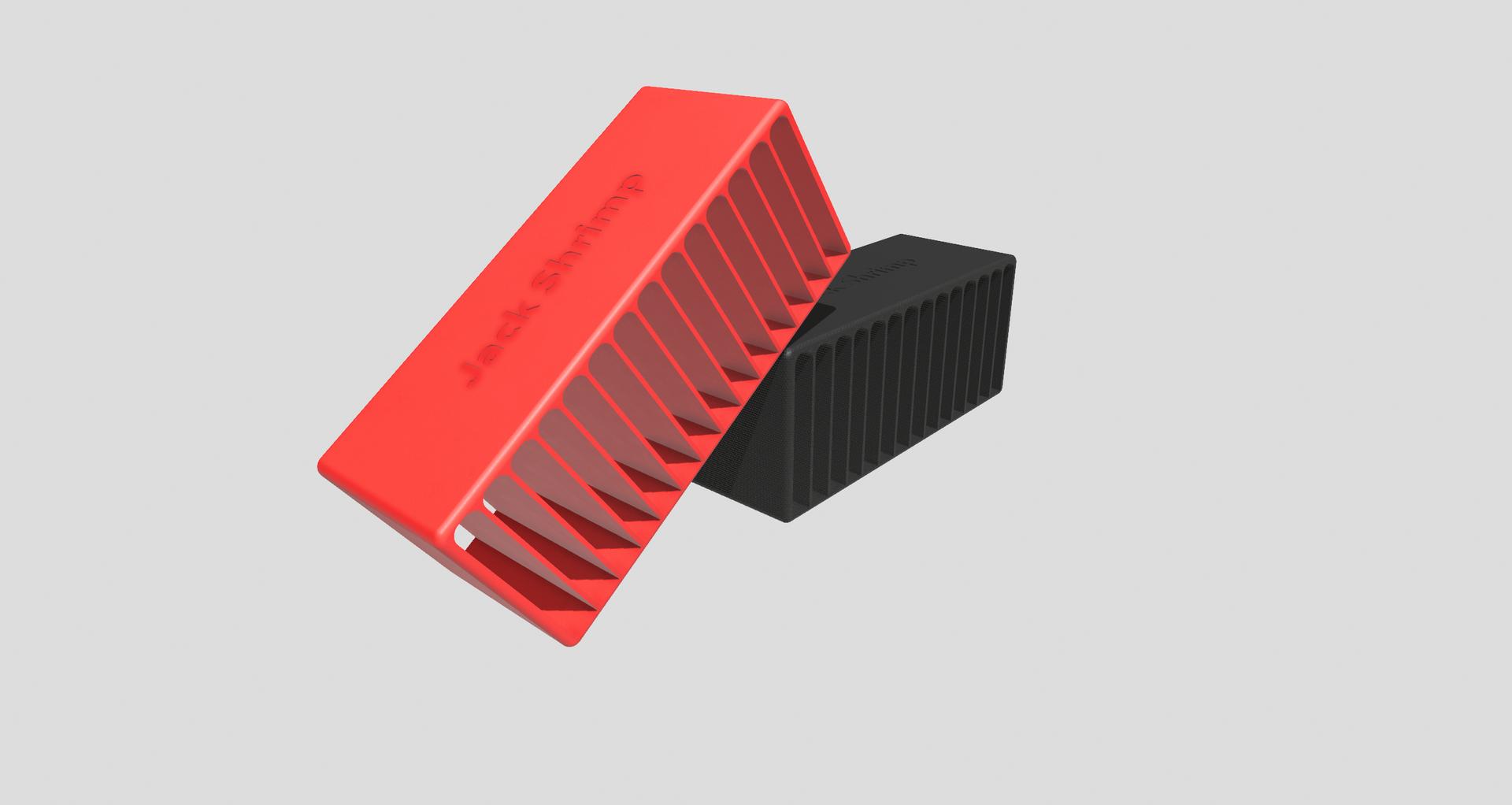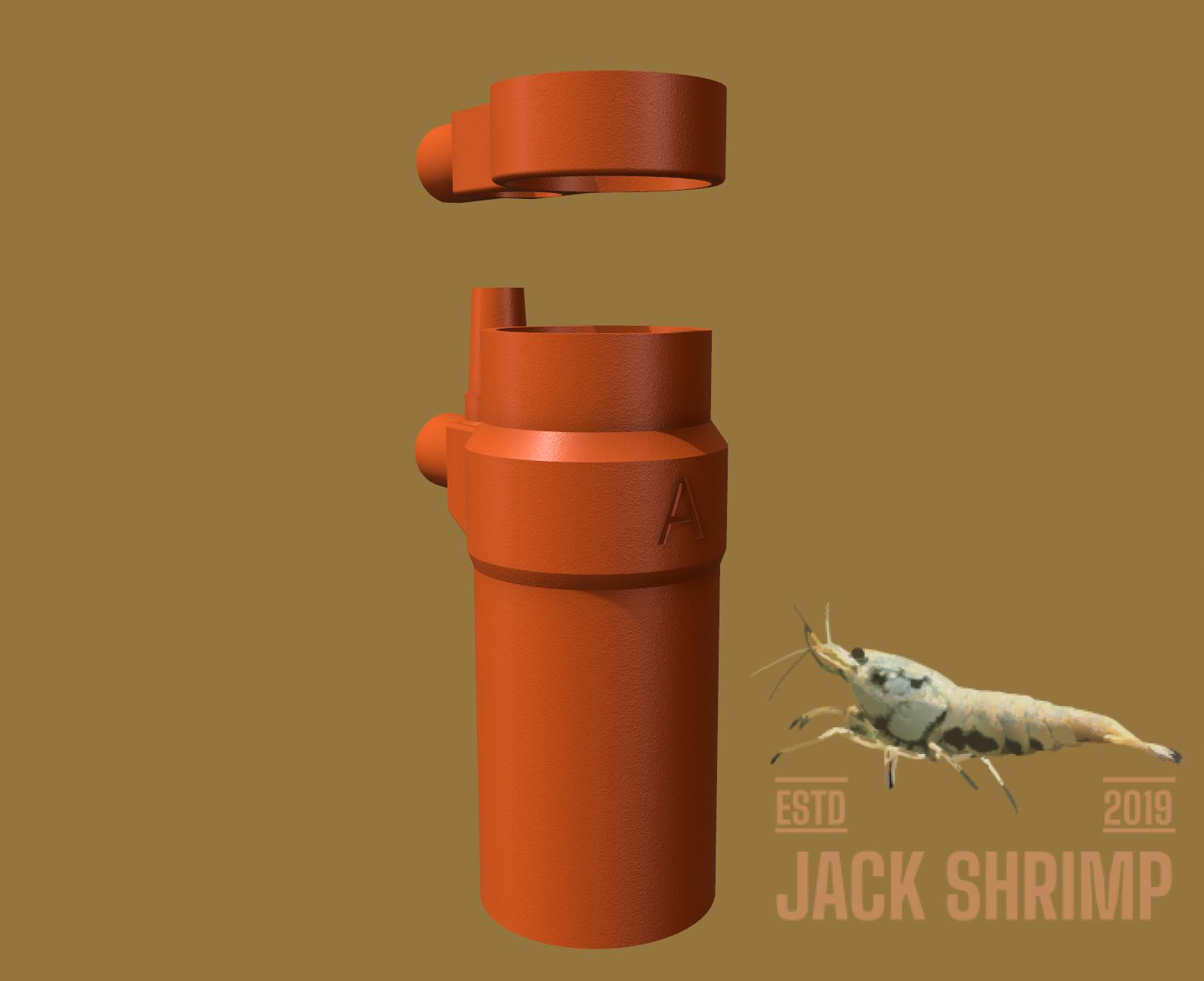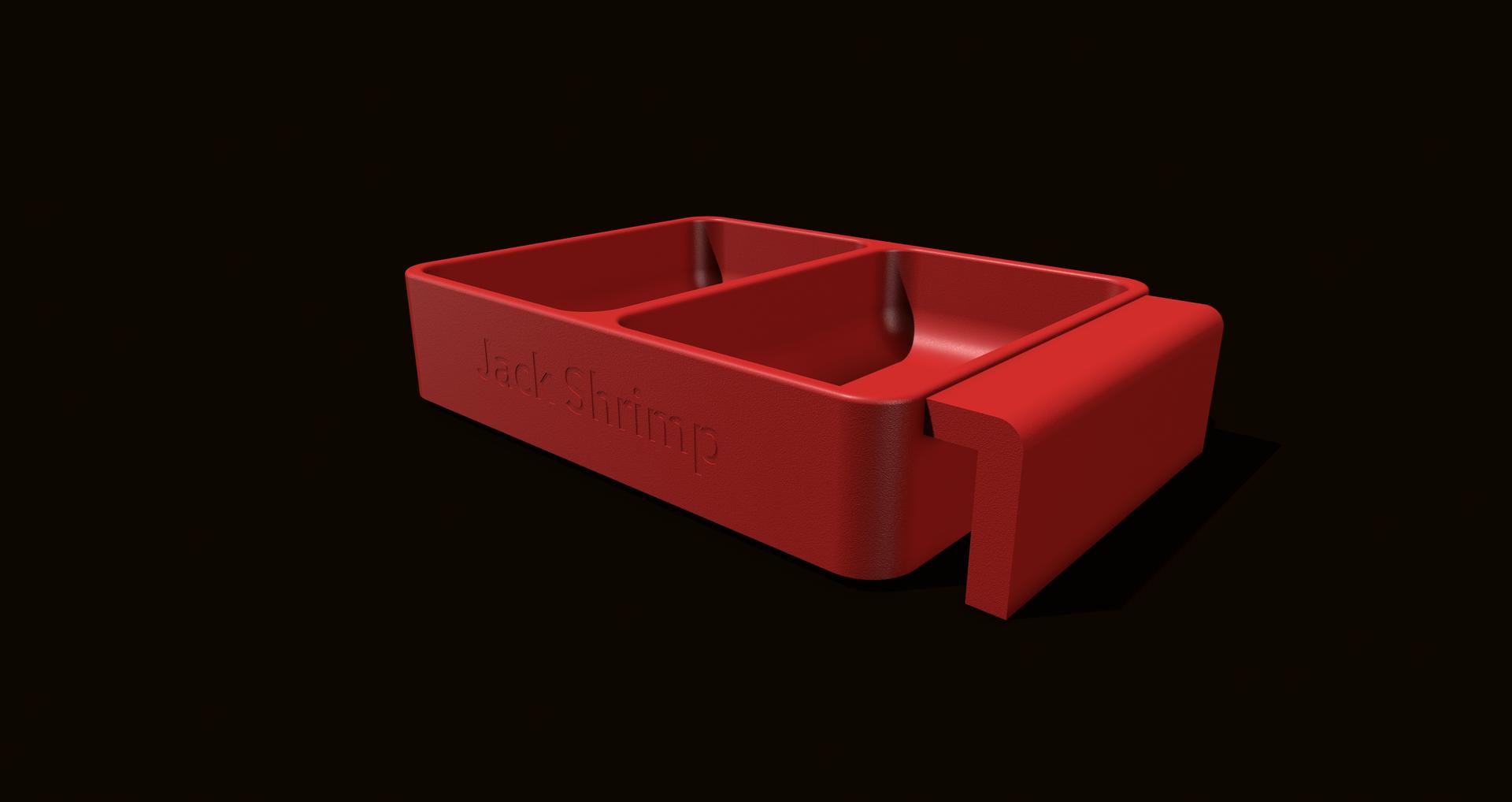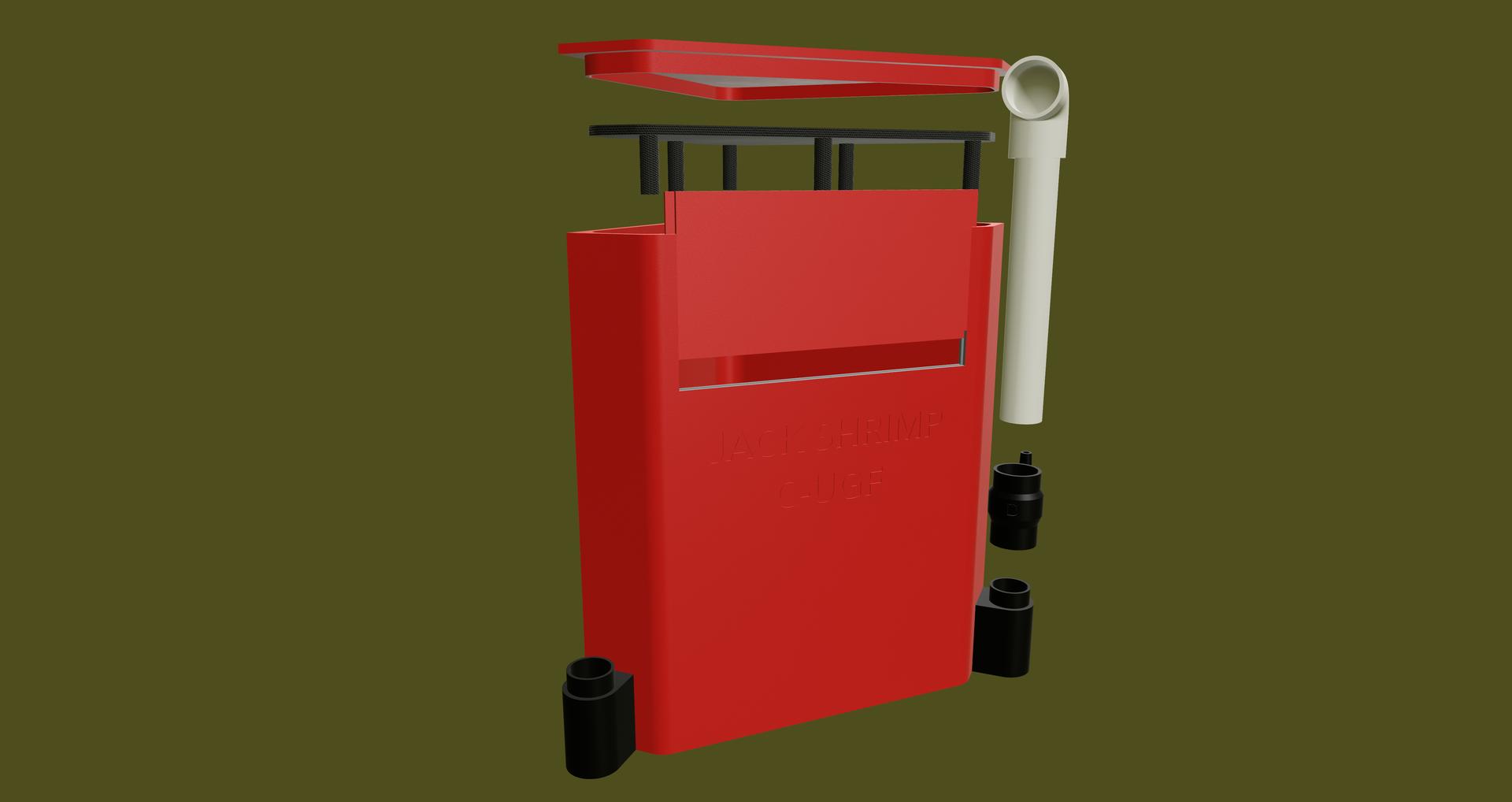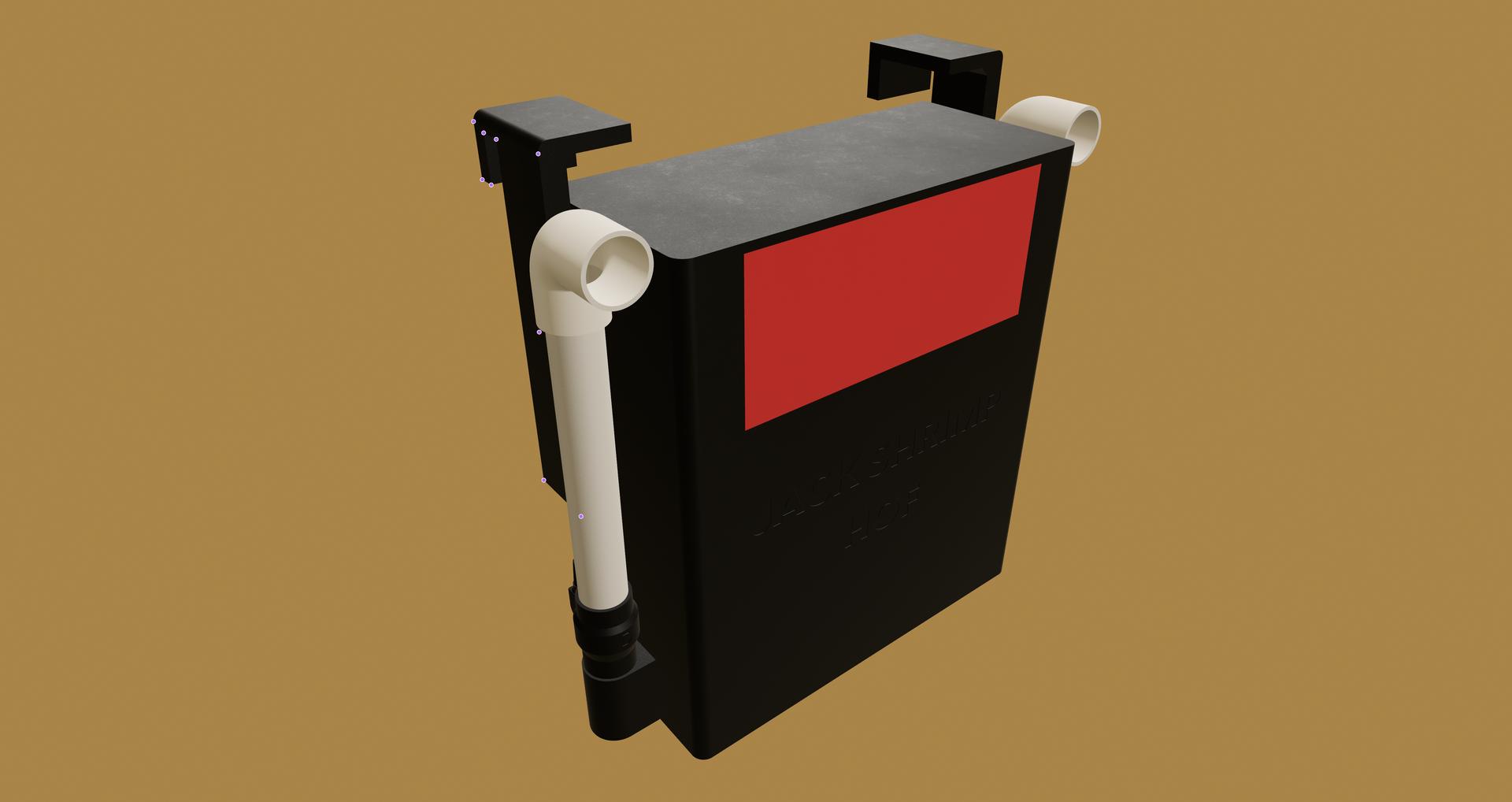
Most hang-on filters leave a gap against the back glass — and that gap is where shrimp go to hide. You cannot see a single one in there, and a shrimp that dies behind the filter rots unnoticed. This one sits flush against the back wall, so there is no gap to hide in, while the base is deliberately lifted clear of the floor so water passes underneath and the tank bottom stays open, clean and easy to read.
The gap behind a filter is where shrimp vanish
Anyone who has kept shrimp a while knows the pattern: the head count drops, you cannot find them anywhere, and weeks later during a teardown you find shells behind the filter. That narrow gap is dark, water barely moves through it, and a shrimp that moults in there weakens out of sight — you never get the chance to step in. A flush design removes the gap entirely: there is no way behind, and every shrimp in the tank stays where you can see it.
The base does the opposite on purpose — it holds a deliberate gap above the floor. Water moves underneath instead of stagnating, debris never builds into a sludge layer under the filter, and when you siphon you can run the hose across the floor behind it without moving anything.
- Type
- Hang-on rear-wall filter, air driven
- Airlifts
- 2 — removable, replaceable
- Media chamber
- Large 1.5 litres · Small 1 litre
- Takes
- Ceramic media · lava rock · active substrate
- Placement
- Flush to the back glass, no hiding gap
- Base
- Raised off the floor — flow underneath, easy siphoning
- Runs on
- Air pump — no motor in the tank
- Material
- Aquarium-safe PETG
The airlifts share the same standard as our airlift line, so a replacement means buying the tube alone — never a whole new filter.
Running in three steps
Fill the chamber
1.5 litres on the large body, 1 litre on the small: ceramic media, lava rock, or active substrate if you want the chamber to work as a soil block.
Hang it flush to the back wall
Push it against the rear glass until it seats; the base holds its own clearance above the floor.
Connect both airlifts
Open the air and balance the two tubes. Done — no motor, no cable in the water.
Large or small?
The large 160 × 70 × 180 mm body holds 1.5 litres of media and suits taller, more heavily stocked tanks; the slimmer 135 × 55 × 160 mm one holds 1 litre and fits shallow or smaller tanks where floor space matters. The small one costs less — picking a size updates the price.
Why two airlifts instead of one?
Two tubes lifting together move noticeably more water than one, while keeping what makes airlift good: silent air drive, no motor in the tank, and an intake that will not take shrimplets.
What if an airlift clogs or wears out?
They are external parts — pull one out, flush it, push it back. For a replacement you buy just the tube, and the filter body stays in the tank.
Can I really put substrate in the chamber?
Yes. Plenty of keepers use the chamber as a contained block of active soil to hold pH and minerals rather than spreading it across the floor — and teardowns are far tidier that way.
Is 3D print aquarium-safe?
We use neutral PETG — no leaching, no colour bleed. Field-tested in our farm for months.
See our other filters
The C-UGF corner undergravel filter and upgraded airlifts for stock bio filters — all in the same aquarium-safe PETG.
Open the design studio →