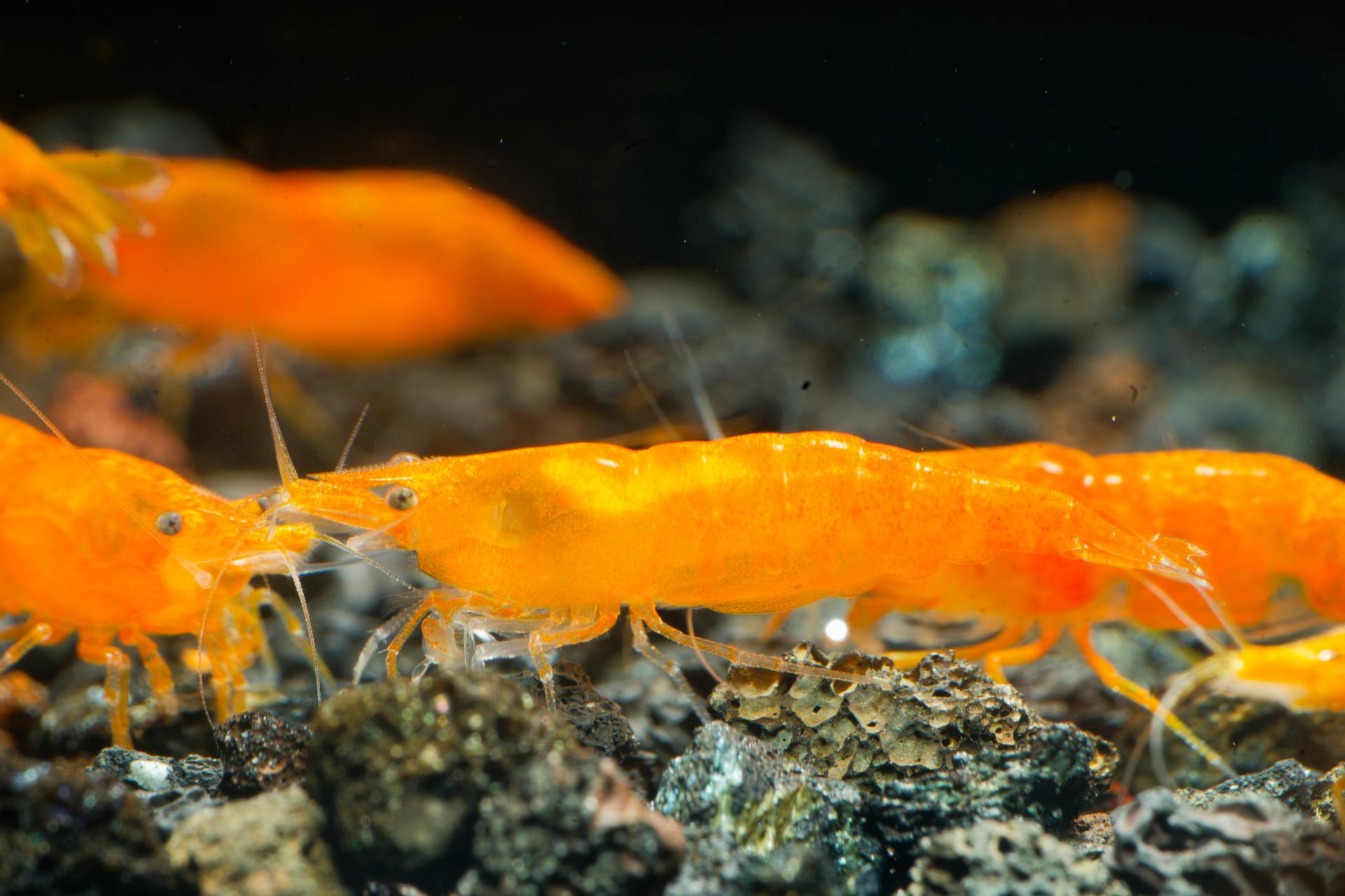
Neos Orange Sakura
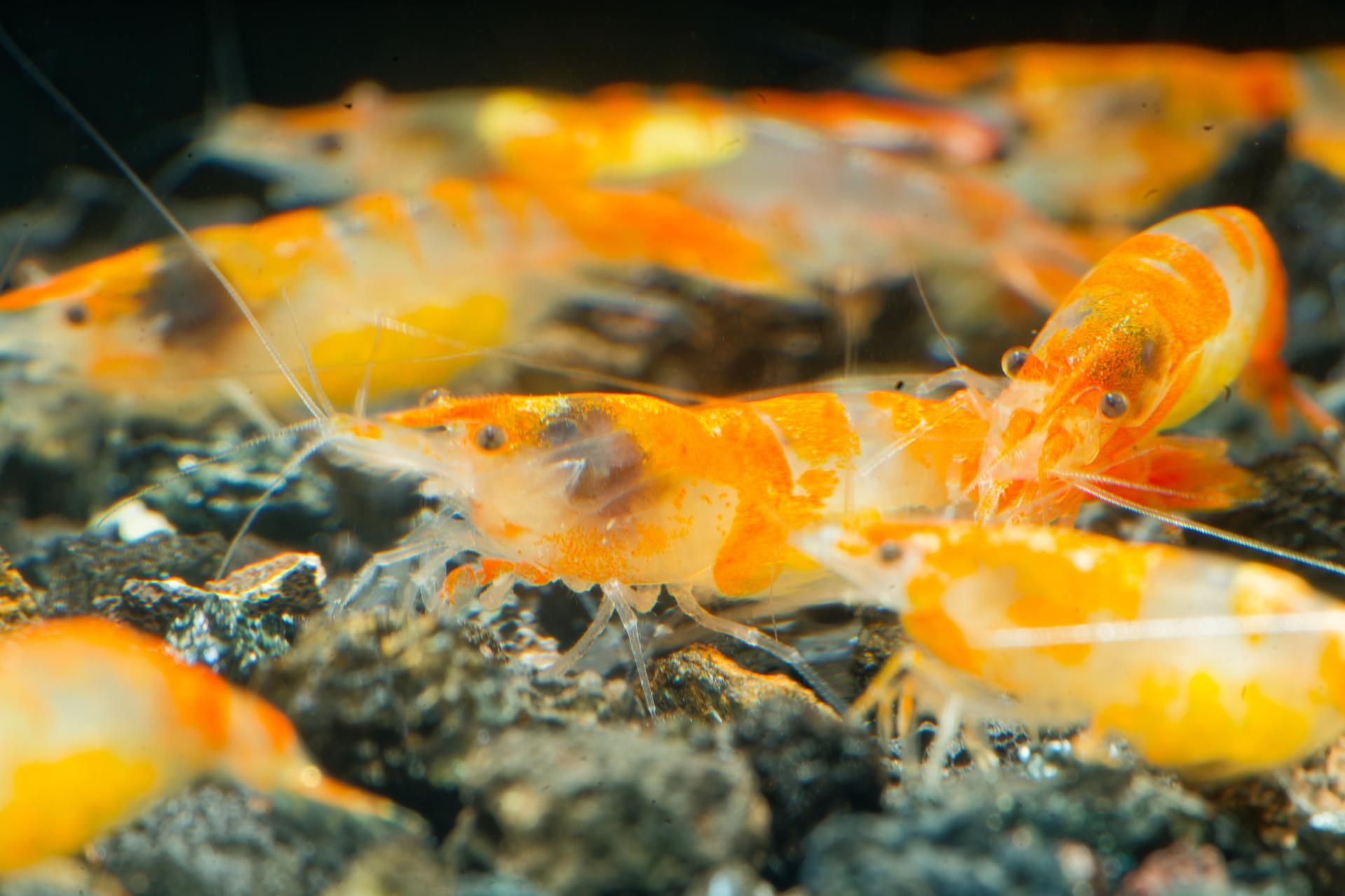
Also sold as Sunkist or Pumpkin. Orange is the intermediate colour: it can be bred up from either the red line or the yellow line, and it comes from a specific balance of yellow and red pigment cells. The pigment sits in the shell, so a good animal is solid orange.
One colour per tank. That is the entire secret to keeping a colour colony beautiful for years.
Orange sits between red and yellow
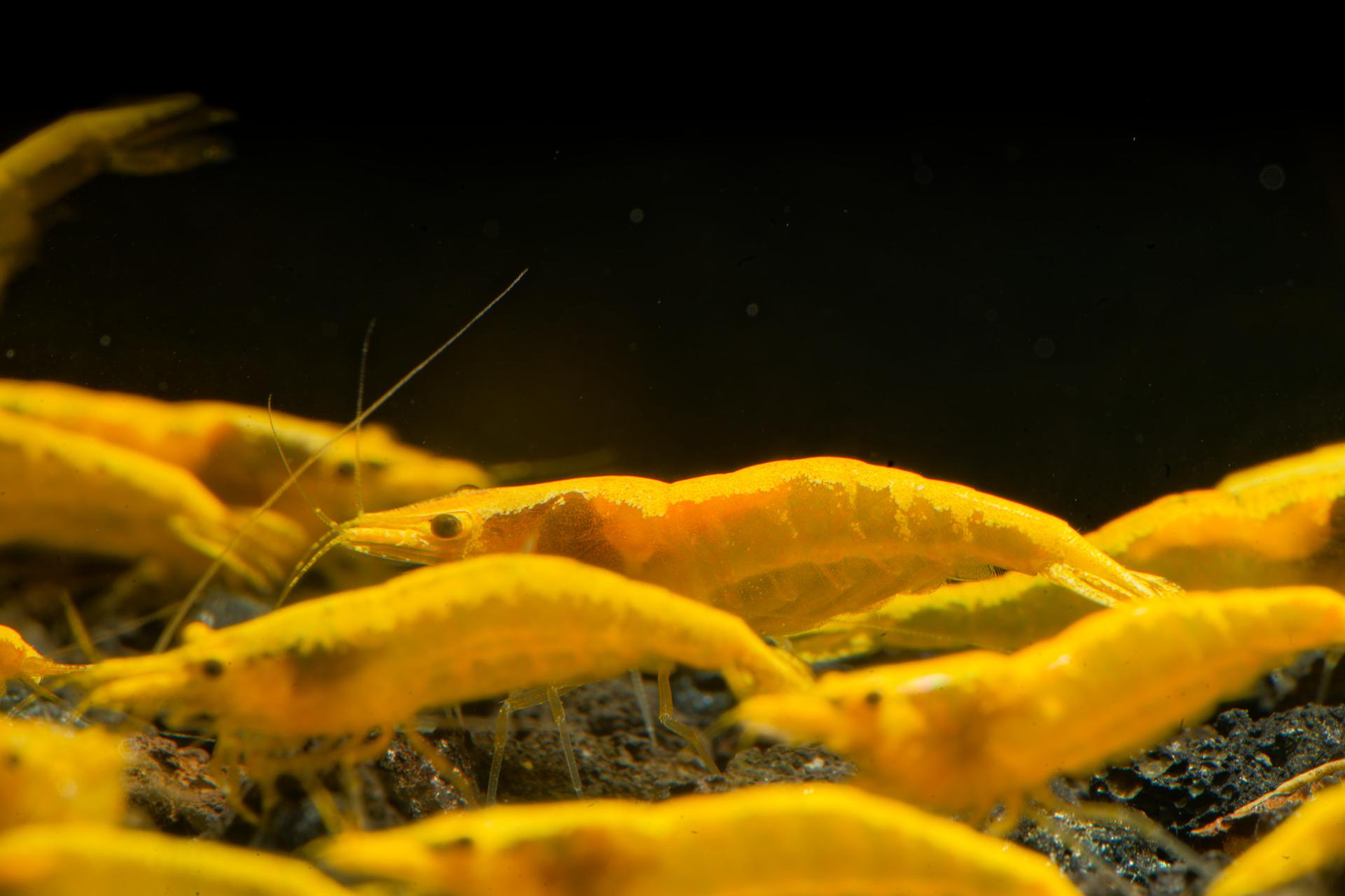
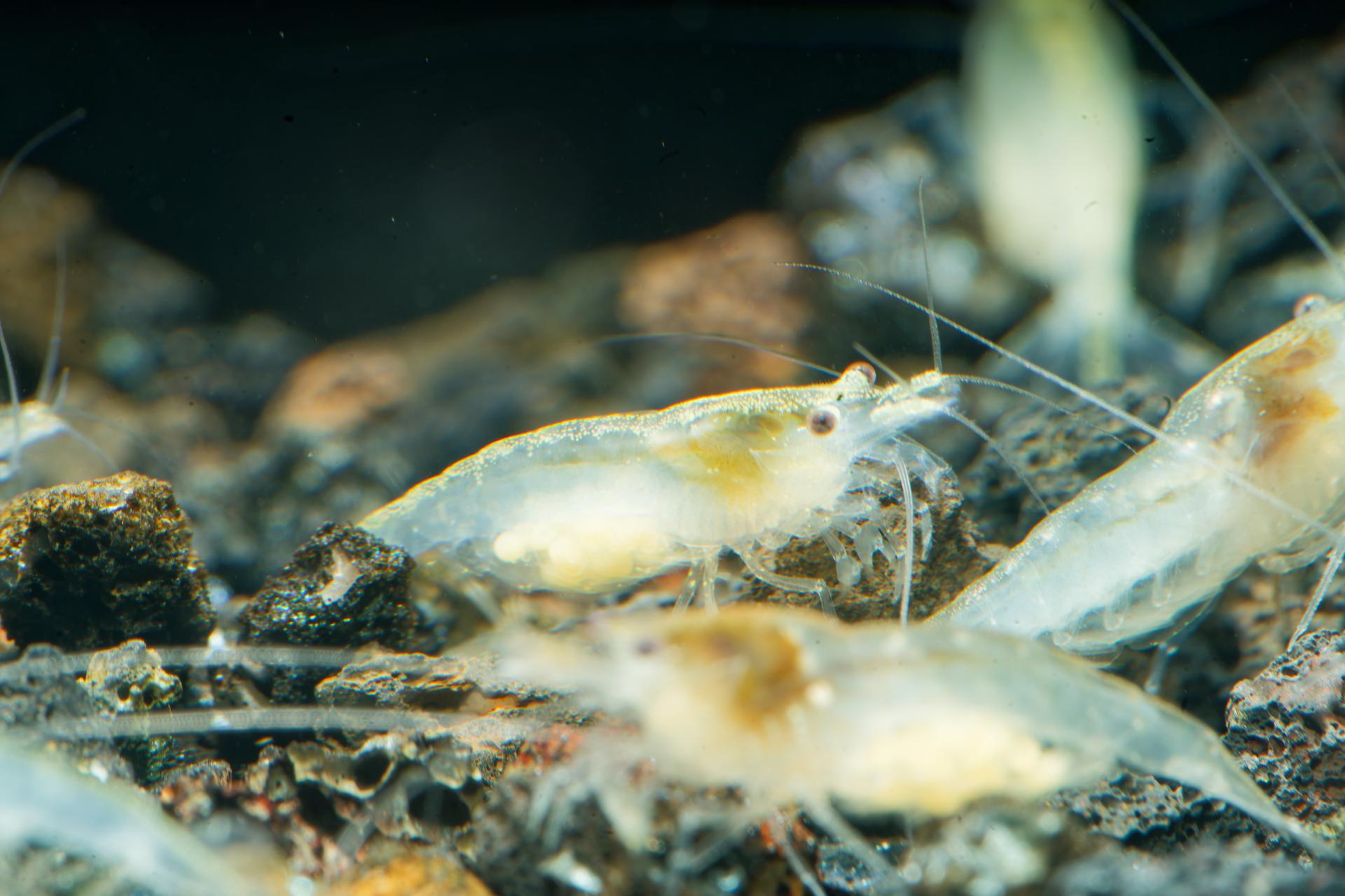
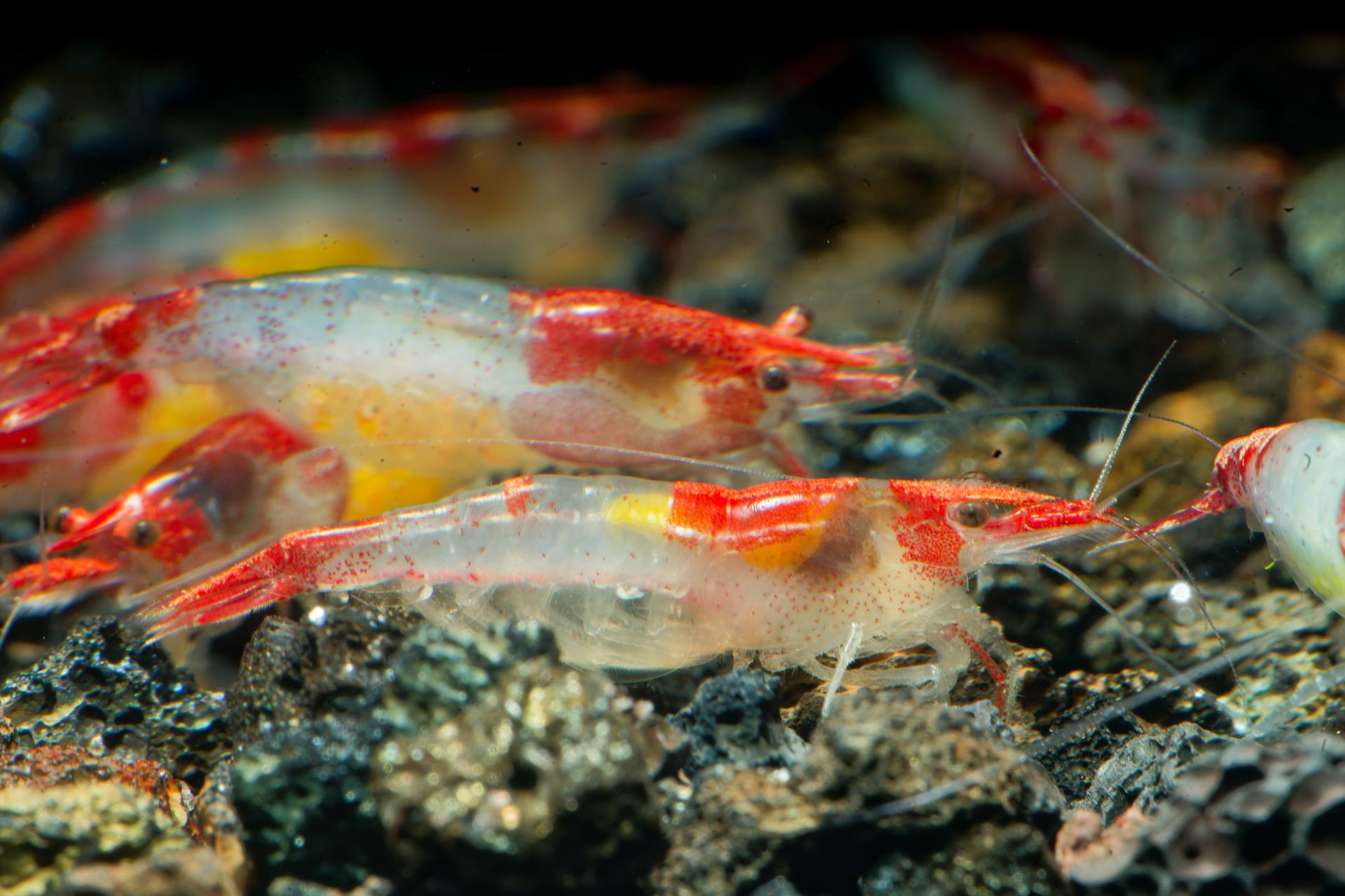
Orange Sakura (Sunkist, Pumpkin) can be selectively bred out of either the red line or the yellow line — orange is the point between the two. The mechanism is a particular balance of xanthophores (yellow pigment cells) and erythrophores (red pigment cells) in the same animal. The colour lives in the SHELL, so a correct animal is solid saturated orange with no translucent patches — the same opacity logic used to grade reds and yellows. And precisely because it sits in the middle, an uncalled colony drifts back toward yellow or toward red.
What a good orange looks like
Ideal keeping conditions
This is the real-world band, not a figure copied from a temperate-climate care sheet. Inside it there is a sweeter spot if you want to dial things in: pH 7.0–7.5, GH 6–8, TDS 180–220, KH 3–5. But a tank sitting at GH 4 keeps and breeds them perfectly well — below 4 is where failed moults start. GH supplies the calcium and magnesium for moulting: too little and you get the 'white ring of death', where a shrimp cannot finish its moult. KH stops the pH falling. And stability still beats perfection — a colony held steady at GH 5 outperforms one chased up and down around GH 8.
Use an INERT substrate — gravel, sand or an inert shrimp gravel. Never use the active buffering soil sold for Bee/Taiwan Bee shrimp. Active soil pulls pH and KH below what Neocaridina need, and it is the most common set-up mistake beginners make.
Keeping them at tropical room temperature is CORRECT — no chiller, and no need to force the tank down to 22–24°C. Neocaridina is native to Vietnam, Taiwan and southern China, where wild water reaches close to 30°C in summer. A controlled culture study at 24 / 28 / 32°C is clear: 28°C is the optimum for growth, maturation and breeding, and it also gave the highest survival. The real ceiling is 30°C — past it females start dropping their eggs and recruitment stops; at 32°C every female loses her clutch. The price of running warm at 27–29°C is a faster metabolism: quick growth and heavy breeding, but a shorter individual lifespan and thinner energy reserves, plus less dissolved oxygen, so aerate and do not overstock. An air-conditioned room at 24–26°C gives longer-lived shrimp that breed more slowly. Both are valid — what kills shrimp is not 28°C, it is going past 30°C and letting the temperature swing.
Orange strain profile
- Scientific name
- Neocaridina davidi
- Line
- Orange line — between red and yellow
- Colour mechanism
- Shell pigment
- Graded on
- Opacity and orange coverage, legs included
- Colour stability
- Genuinely disputed — see the genetics section
- Adult size
- 2–3cm
Strain map — every colour comes from ONE species
Every commercial colour strain is Neocaridina davidi, selectively bred from the mottled brown wild-type animal. They are colour morphs — not separate species, and not hybrids.
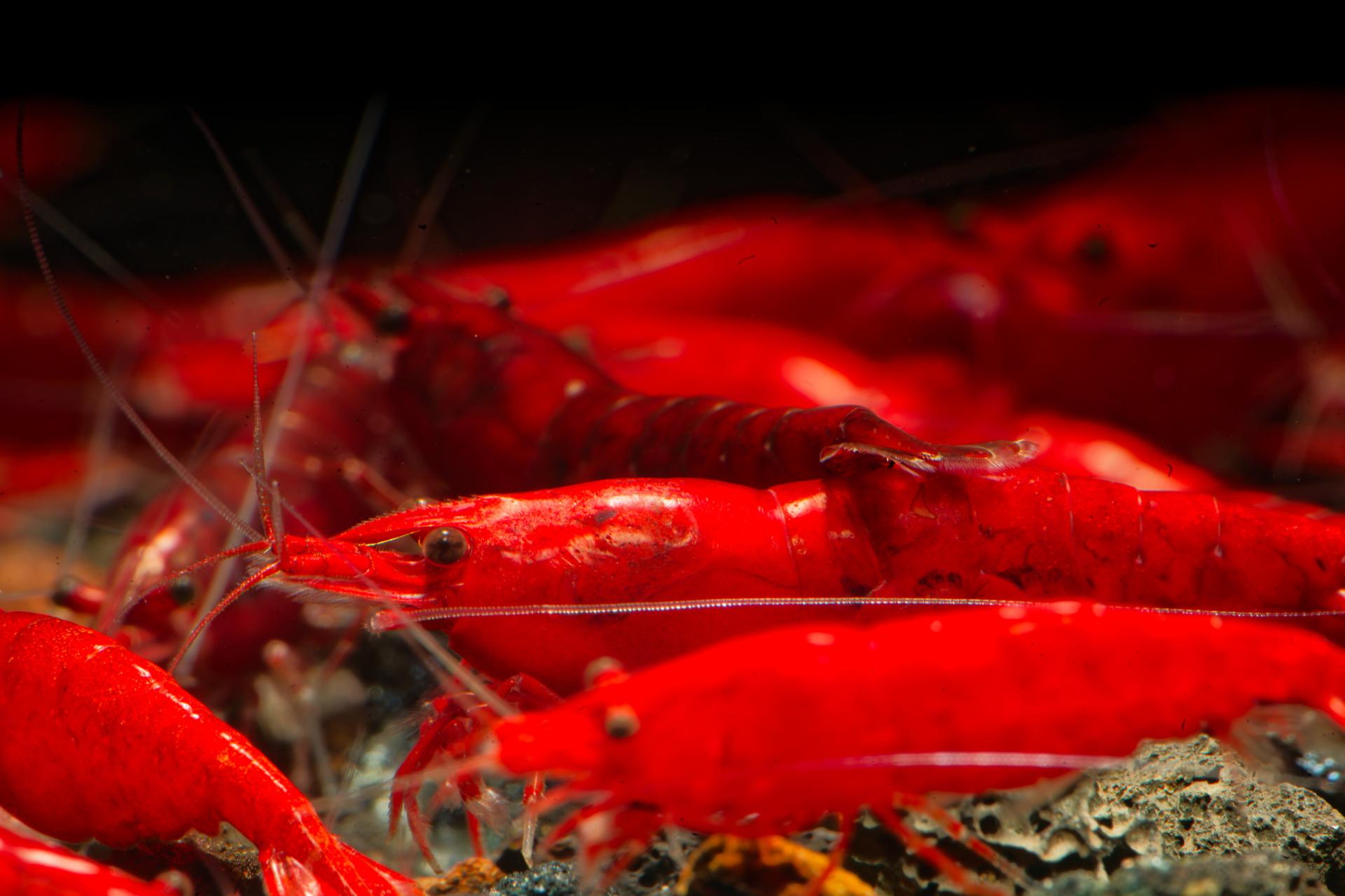
- Red lineCherry → Sakura → Fire Red → Painted Fire Red → Red Rili
- Chocolate / brown lineChocolate → Bloody Mary, Black Rose → Carbon Rili
- Yellow lineYellow → Golden Back (dorsal stripe)
- Orange lineOrange Sakura → Orange Rili
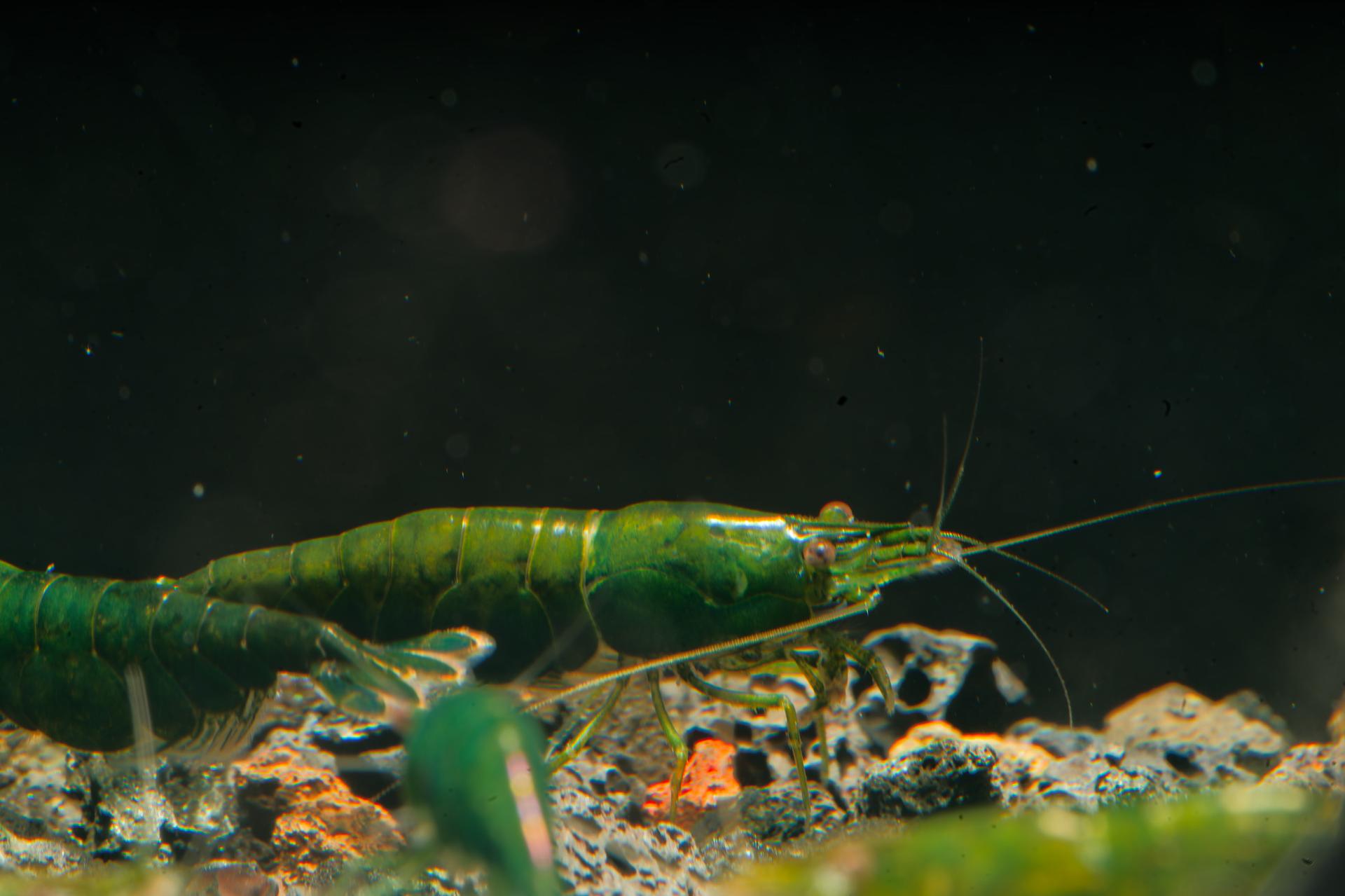
- Green lineGreen Jade / Green Diamond — blue plus yellow pigment
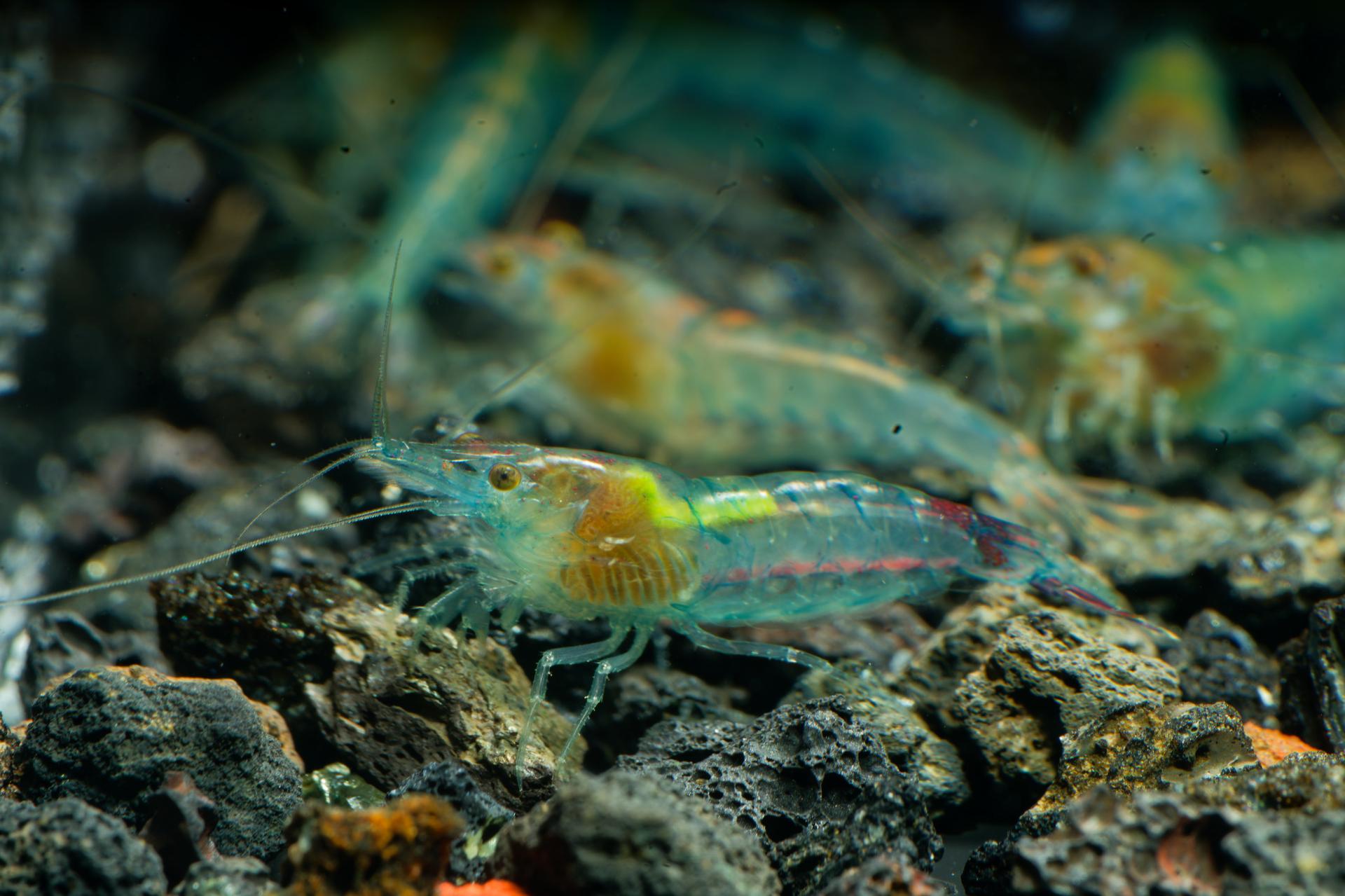
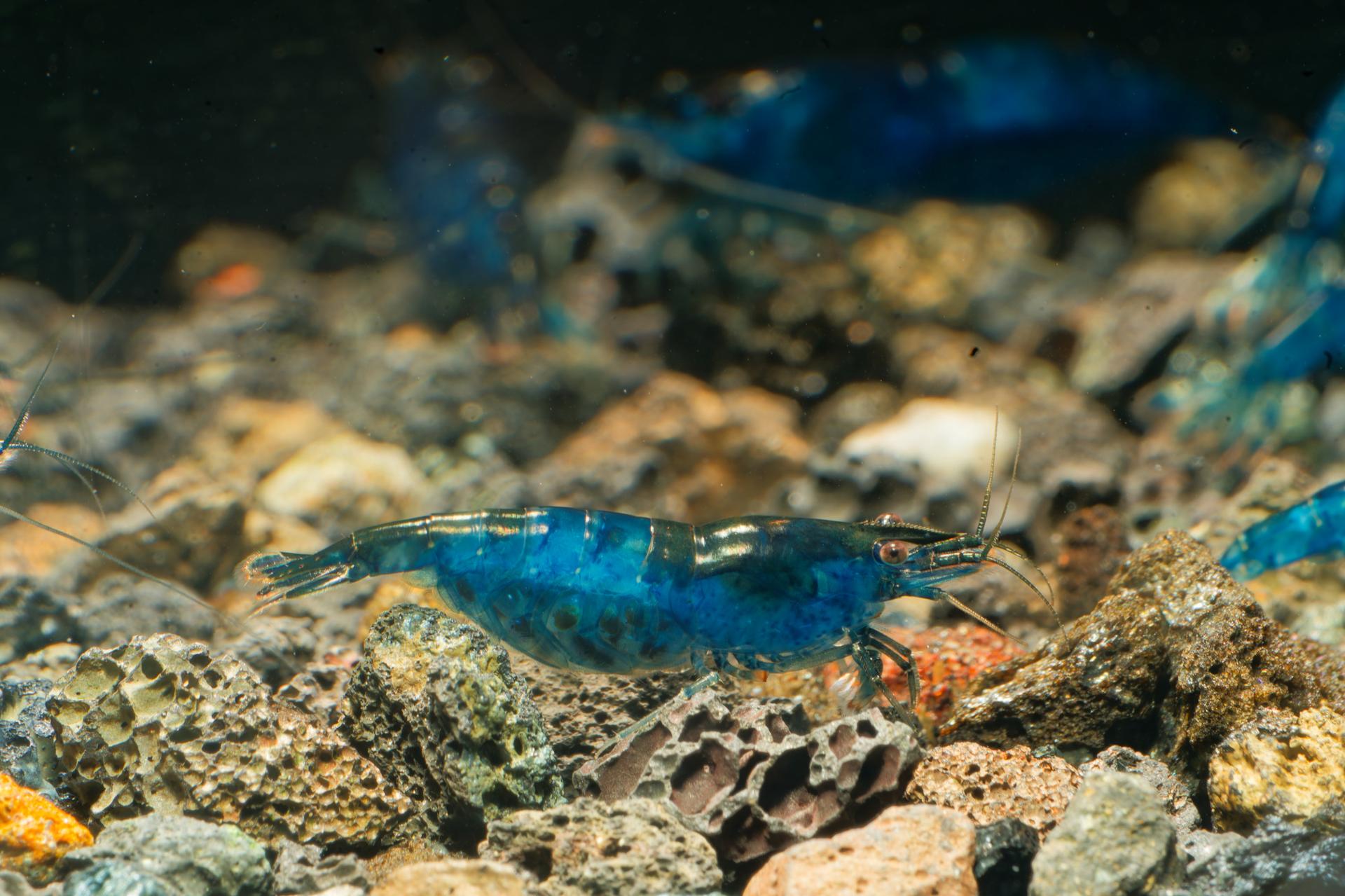
- Blue Dreamfrom Carbon Rili — NO red genetics
- Blue Jelly / Blue Velvetfrom Red Rili — still carries red
The two blues look alike but come from different lines. Housing them together brings red genetics back and the colony goes wild-type.
How stable is the orange line really?
Reputable sources contradict each other here, so we give you both. One breeder source calls orange shrimp easy to keep and readily reproducing — a settled line. Another rates the orange line unstable compared with other varieties and less hardy, recommending it for intermediate keepers. What is not in doubt is the mechanism: because orange sits between red and yellow, an uncalled colony drifts toward one parent or the other. Keep it as the only colour in the tank, breed from the most saturated animals and pull the ones tilting yellow or red.
One colour per tank. Every colour strain is the SAME SPECIES, so they interbreed freely — and because wild-type colour is dominant, a mixed colony reverts to mottled brown within 2–3 generations. It is not reversible in practice. Two colours means two tanks.
'Grade' describes an individual's APPEARANCE — mainly opacity and colour coverage — not a genetic category. A high-grade pair still throws a spread every clutch, and males always look a grade paler simply because they are male. Holding a grade means culling continuously.
Neocaridina, Bee and Sulawesi need three different waters
- Neocaridina (colour shrimp)
- 24–29°C · pH 6.8–7.8 · GH 4–12 · KH 2–8 · INERT substrate
- Bee / Taiwan Bee (Caridina)
- 20–24°C · pH 5.8–6.8 · GH 4–6 · KH 0–1 · active acid soil
- Sulawesi shrimp & snails
- 27–30°C · pH 7.8–8.5 · GH 6–8 · KH 3–6 · alkaline substrate
Genetically, Neocaridina CANNOT hybridise with Bee shrimp or Sulawesi shrimp — different genera do not interbreed. But the three groups need three completely different waters, so they cannot share one system. This is the single most common piece of bad shop advice. Read the table carefully: what separates Neocaridina from Sulawesi is NOT temperature — the two overlap at 27–29°C — it is pH and KH. Sulawesi need alkaline water at pH 7.8–8.5 with a maintained KH, where Neocaridina sit right at the top edge of their range. Bee shrimp are the opposite again: acidic, KH near zero, on buffering soil.
The matching set-up
Omnivorous grazers: biofilm, algae and detritus. Feed every 2–3 days, not daily — leftovers reduce breeding and drive planaria and hydra. Carotenoid-rich food (astaxanthin, spirulina) genuinely deepens expressed colour but cannot change genetics. Iodine supplements are not needed for moulting — GH is. And leave shed moults in the tank; the shrimp eat them back for the minerals.
Dissolved copper is lethal at roughly 0.06–0.08 mg/L. The real killers are copper-based fish medications, snail treatments, concentrated micro fertilisers, copper plumbing and pesticide-treated plants. Dietary copper, on the other hand, is essential — shrimp blood carries oxygen using copper-based hemocyanin. Note that copper adsorbs into silicone and leaches back out for months.
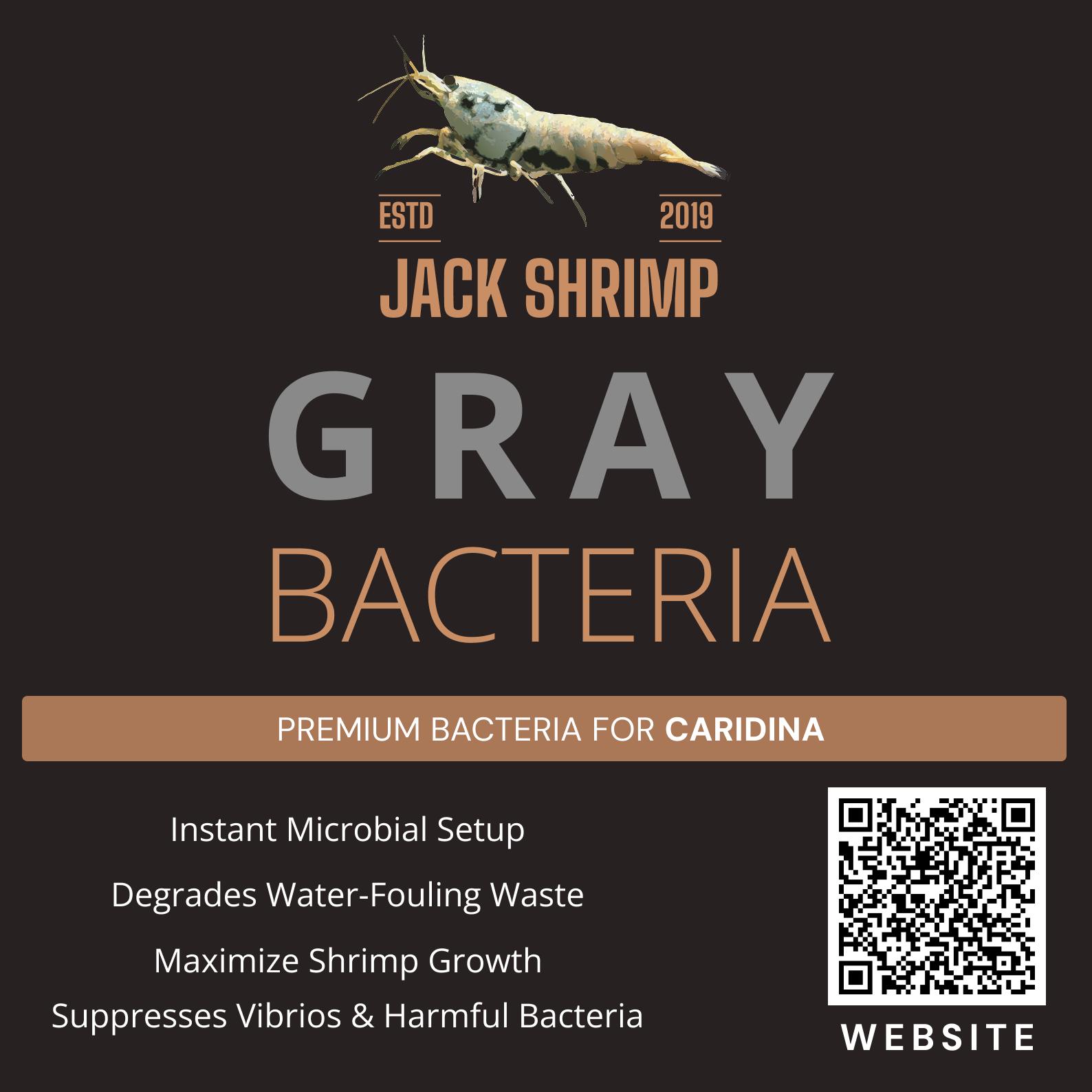
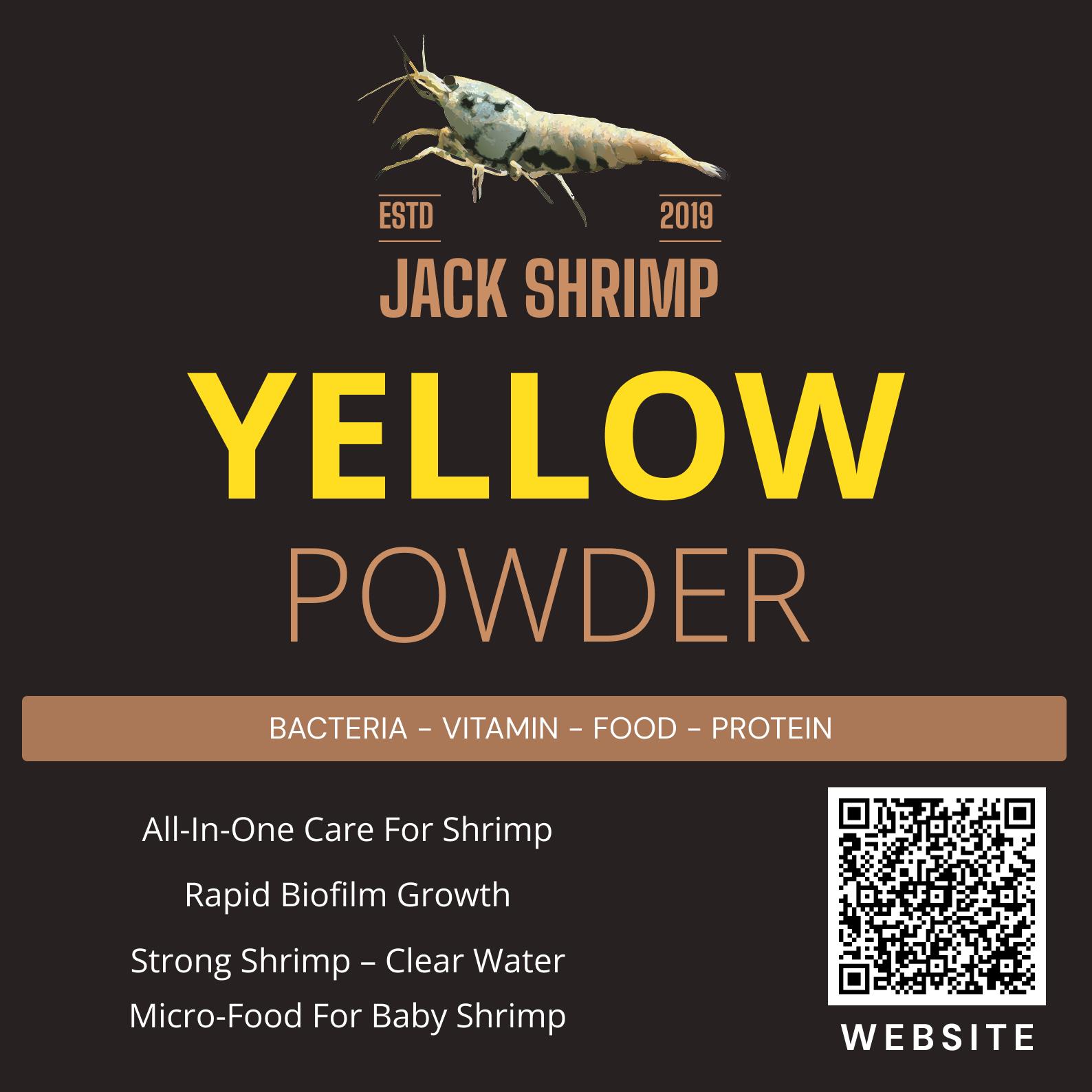
The bacterial duo for a cold-water shrimp tank: Gray Powder handles the culture — seeding and holding the beneficial bacteria, growing the biofilm the shrimp graze on, steadying biological filtration and easing stress at introduction, during moults and after water changes. Yellow Powder adds bacteria, vitamins and protein for colour and steady breeding. Use both together.
New to colour shrimp?
Read the full Jack Shrimp guide to a Neocaridina tank: inert substrate, GH/KH minerals, cycling, safe acclimation and holding colour across generations.
Read the set-up guide