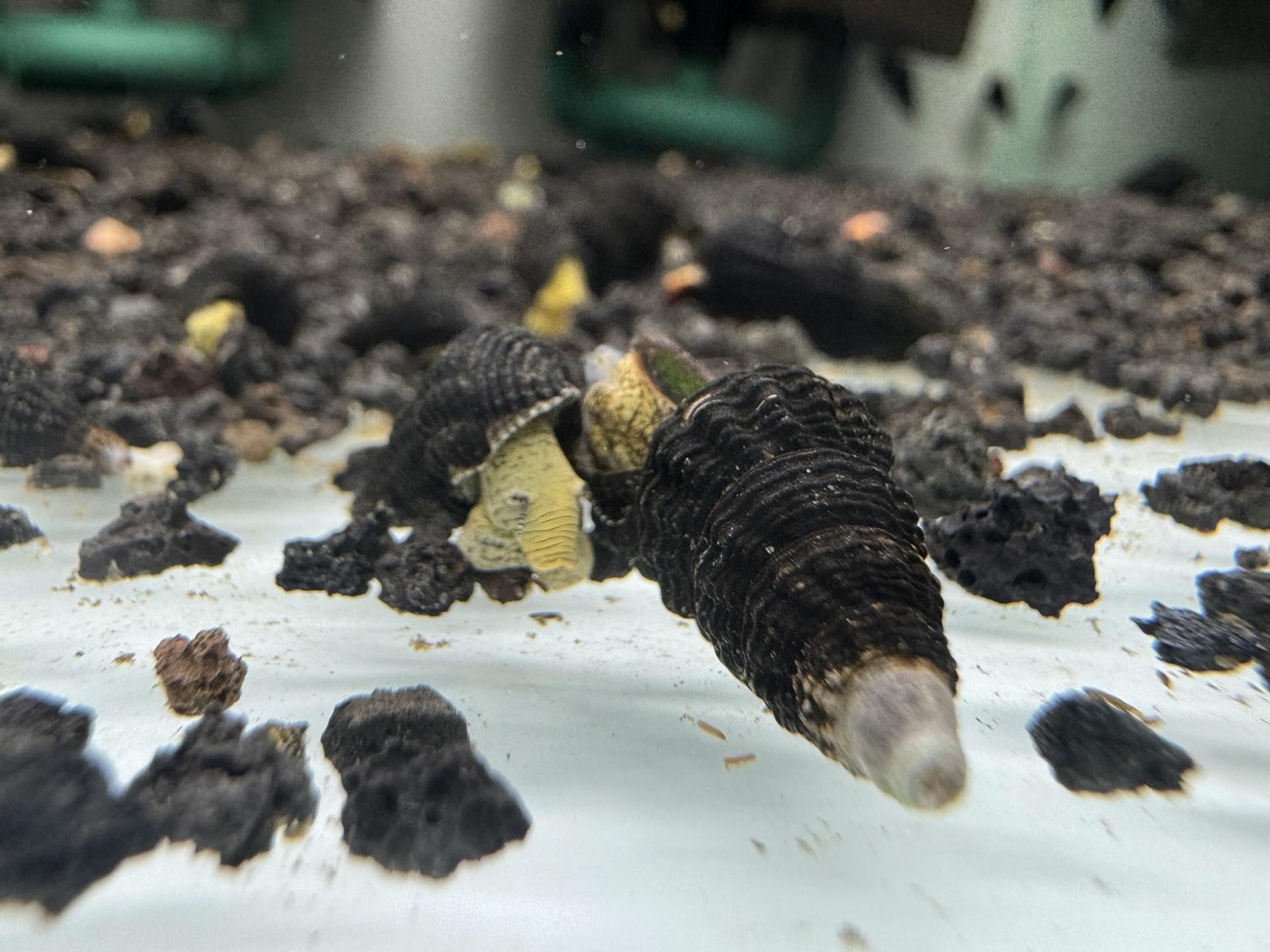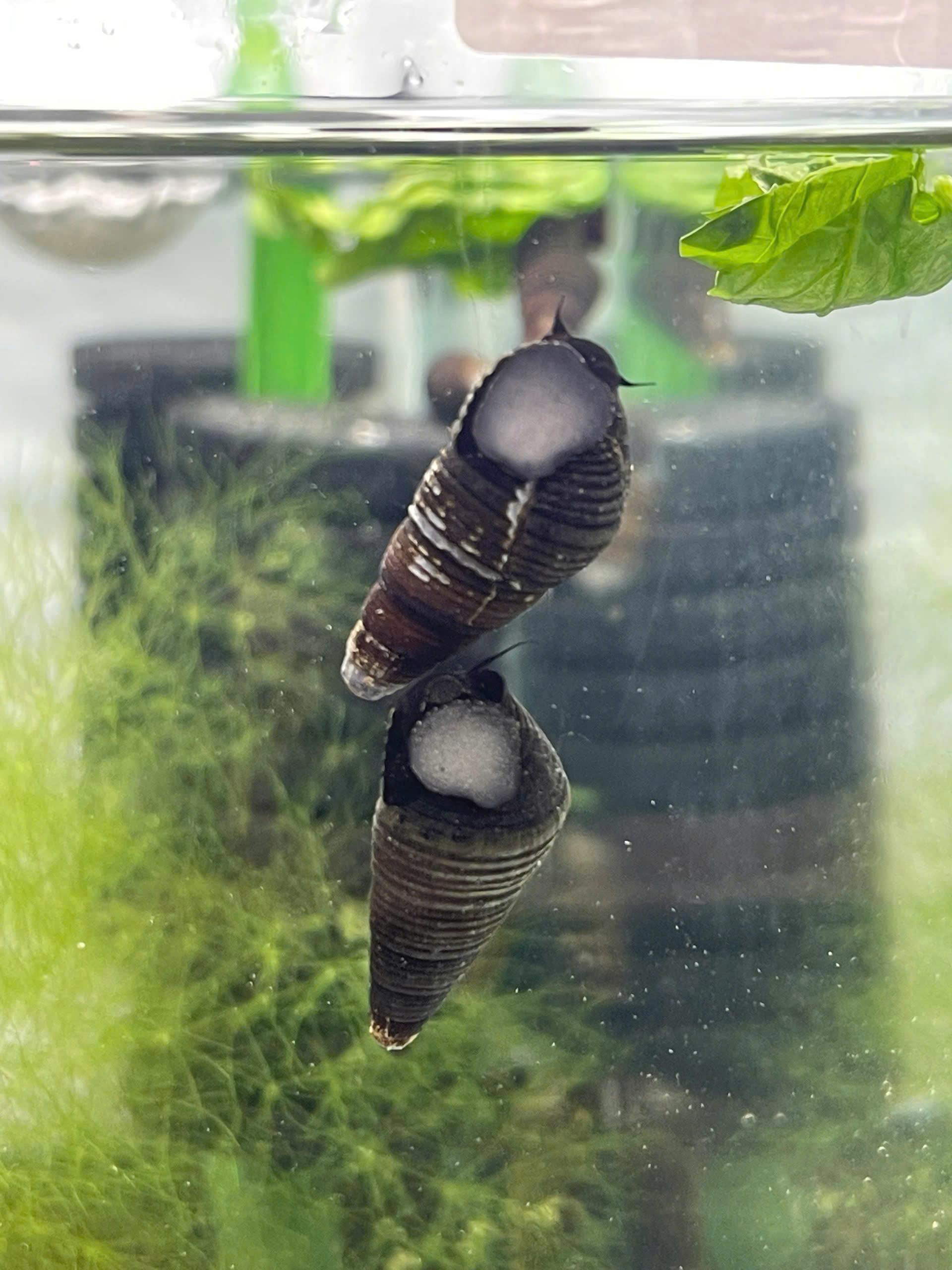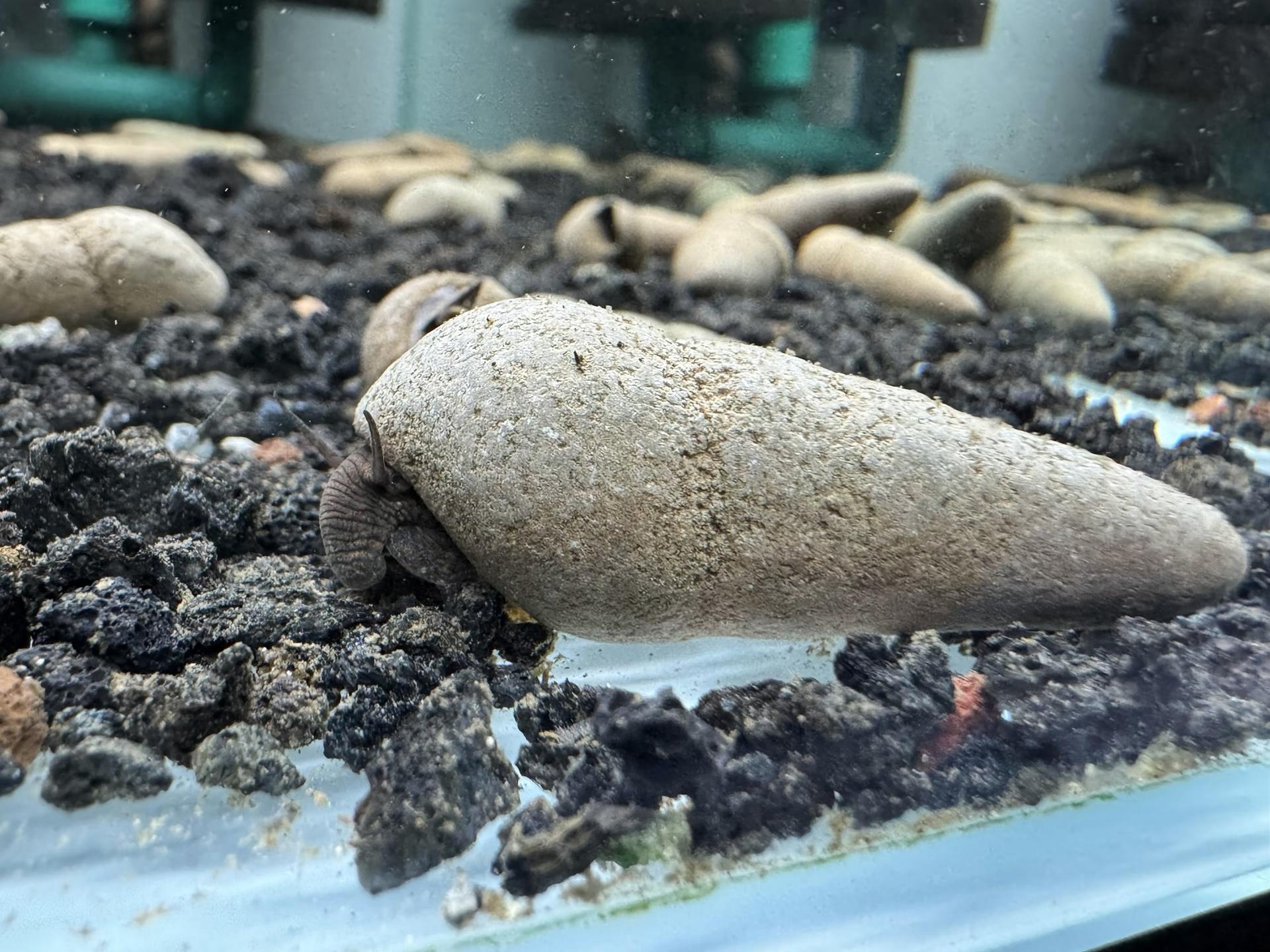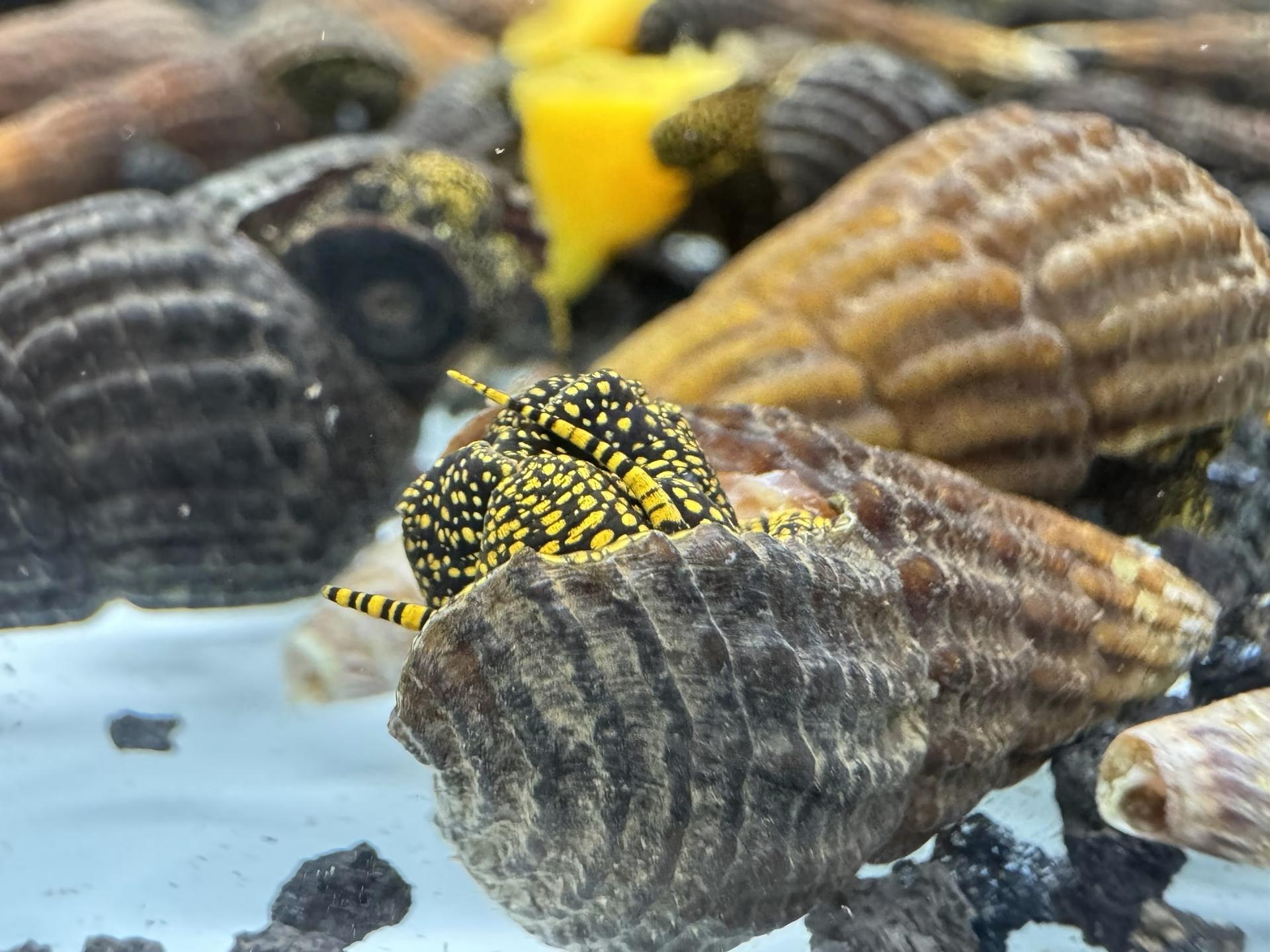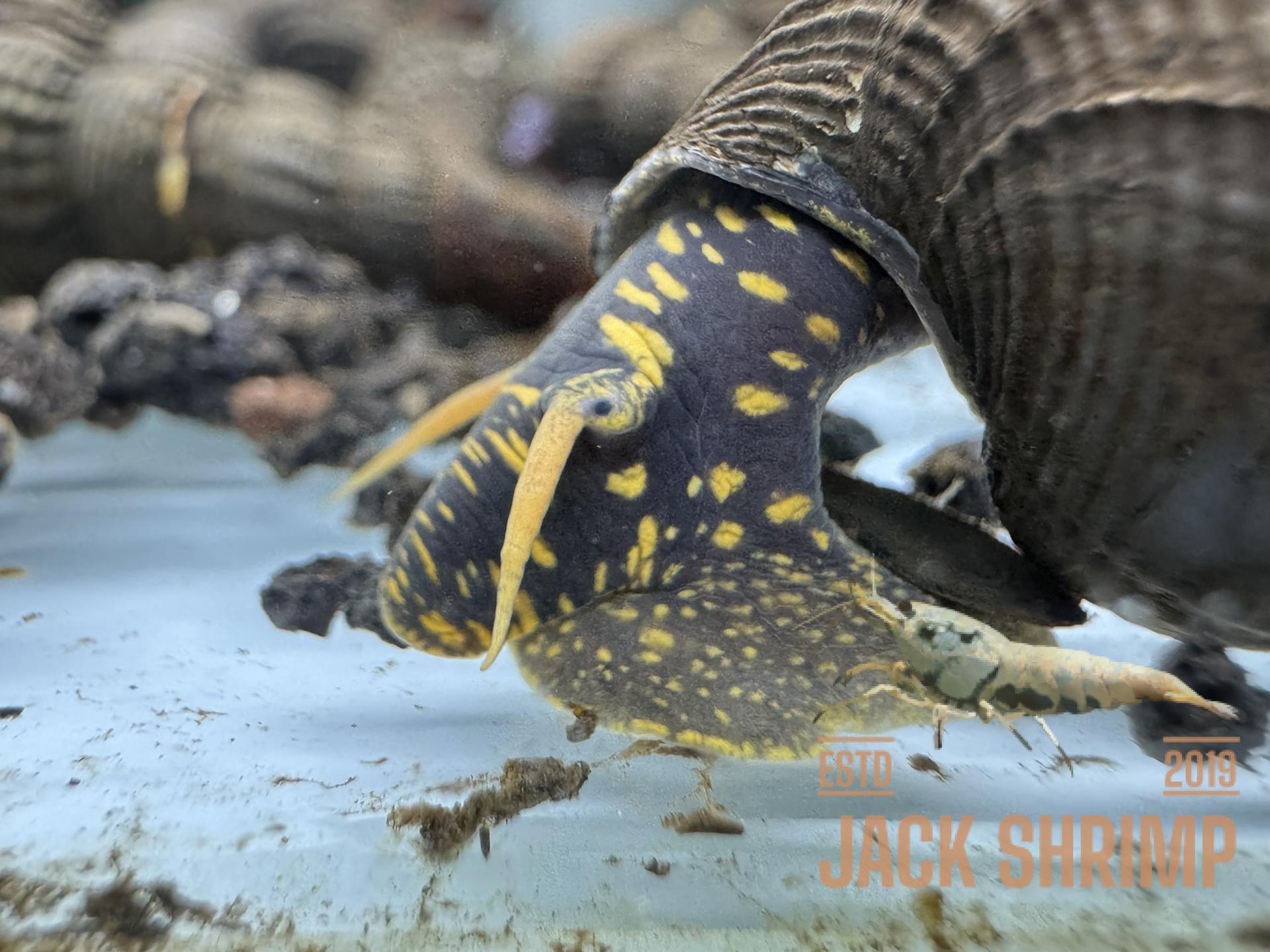
Yellow Spotted Poso Rabbit Snail
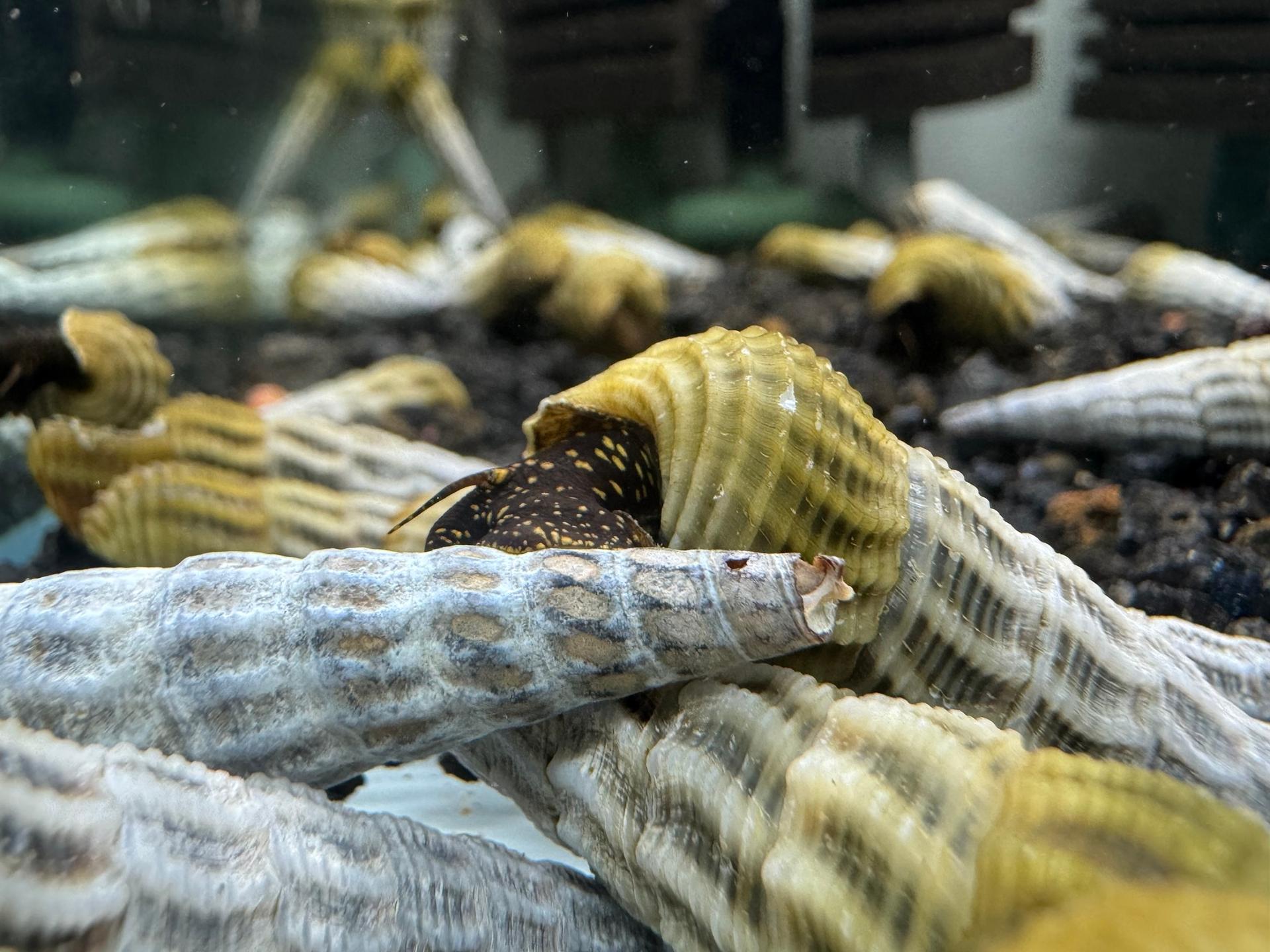
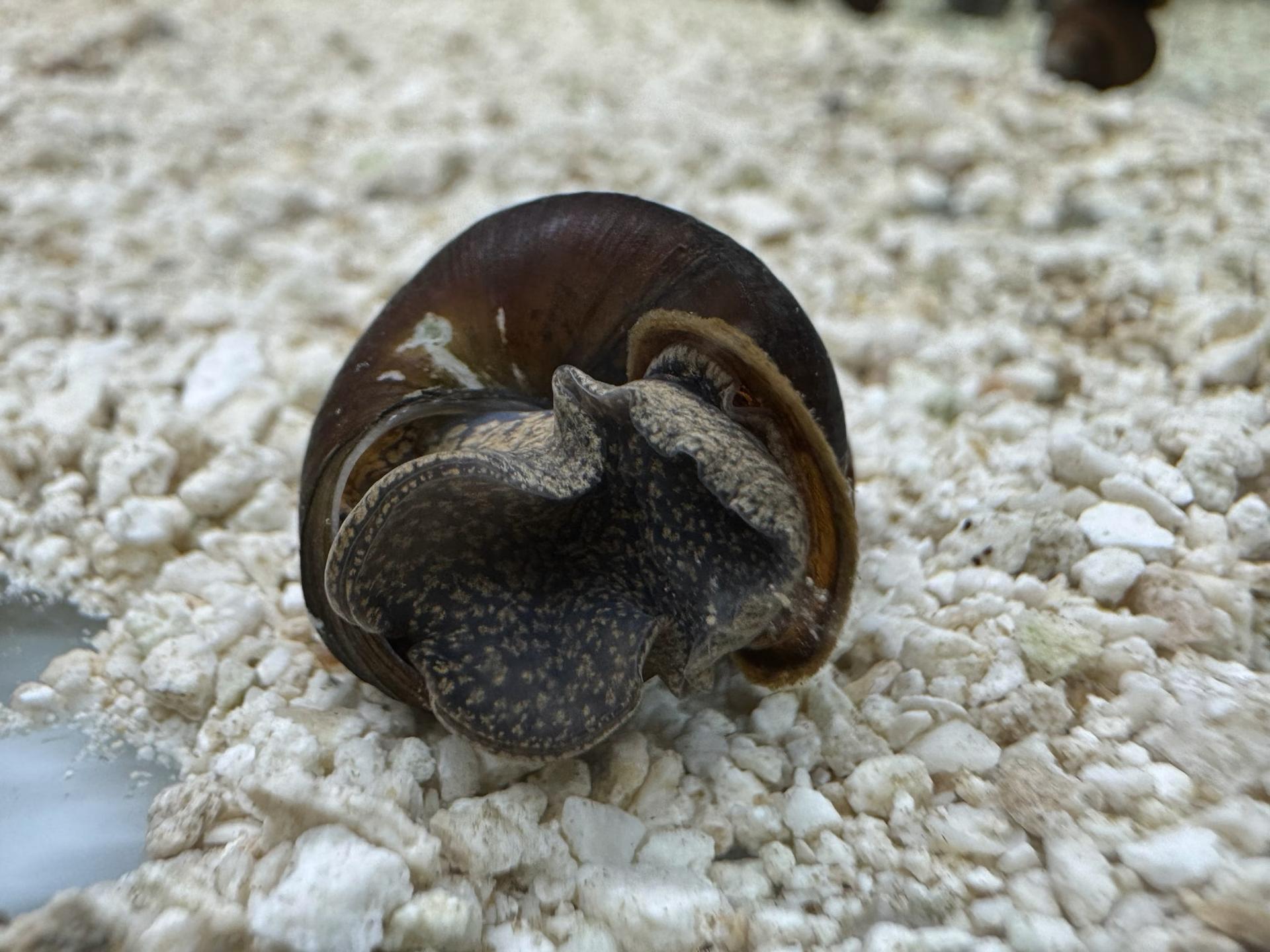
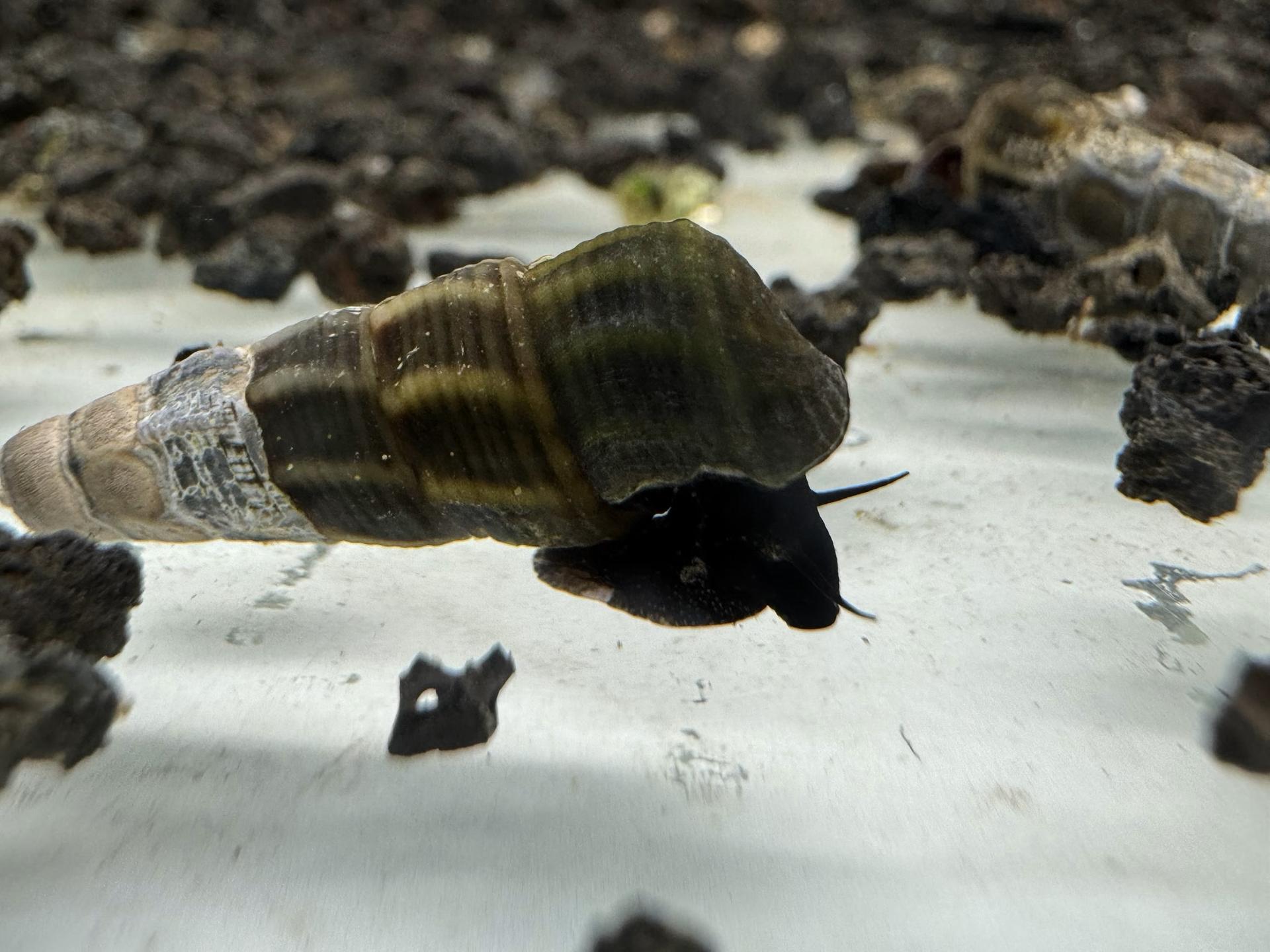
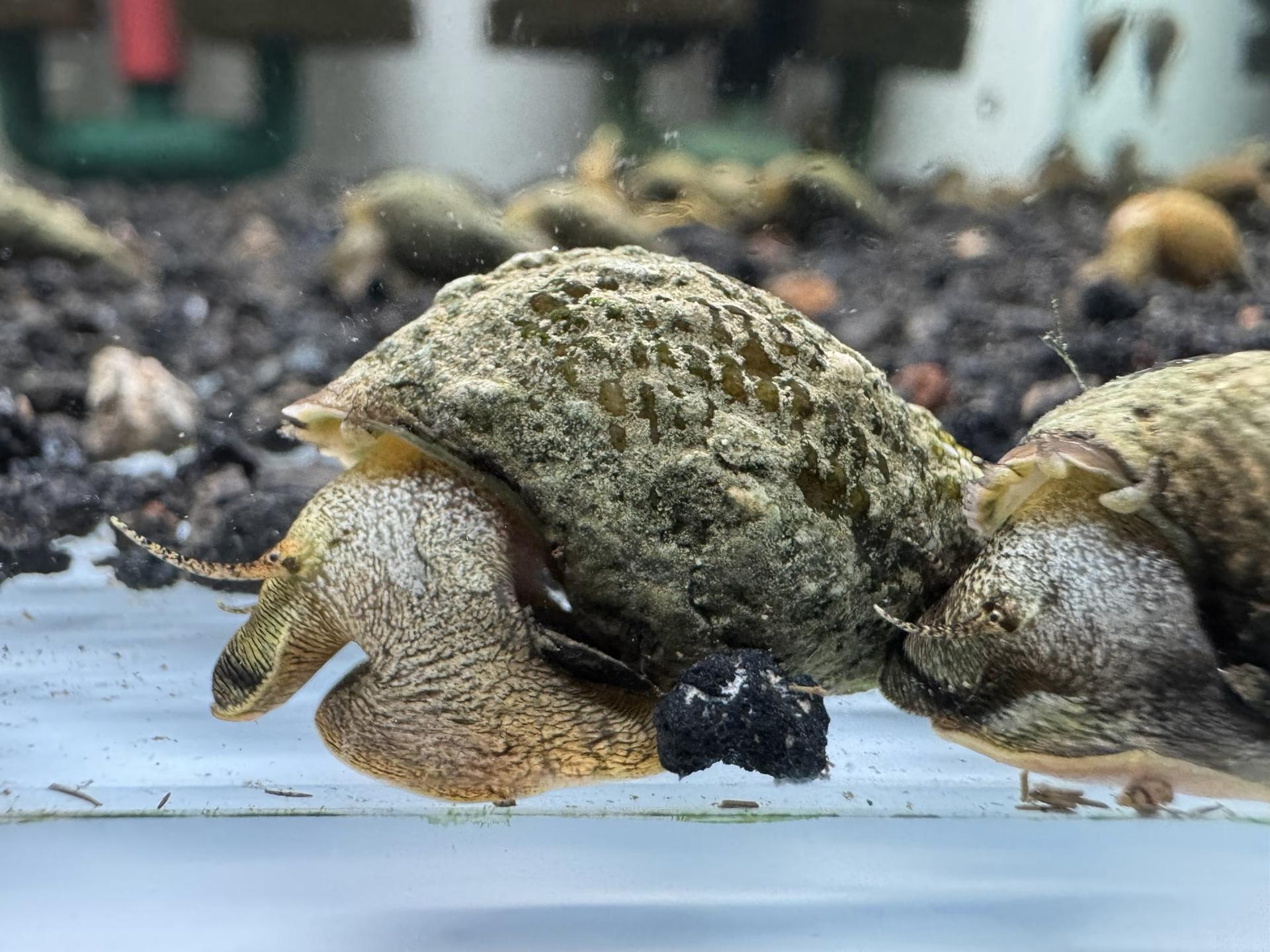
A dark grey-black body scattered with clear golden spots across head, foot and mantle edge, carried under a golden-brown, moderately ribbed shell. This is the best-supported identification in the spotted group — but the 'cf.' in front of the name stays.
A rabbit snail is not a cleaning crew — it's a collector's animal, and it has to be kept like one.
Lake Poso, and why we keep writing 'cf.'
Garnelio, a careful German importer, sells its Yellow Spot as Tylomelania cf. toradjarum. T. toradjarum is a Lake Poso endemic with a shell to 54 mm, so both the locality and the size fit. The 'cf.' means 'compares with, not confirmed', and it earns its place: Lake Poso still holds around ten undescribed forms. By contrast, listings that print T. towutensis or T. towutica on a Poso animal are simply wrong — those are Lake Towuti species, in the Malili system.
An ancient cradle
Sulawesi shrimp are endemic to a handful of ancient tectonic lakes — 1–4 million years old, among the oldest freshwater lakes on earth.
Identifying the Yellow Spotted Poso
Ideal keeping conditions
The Sulawesi lakes are hot and alkaline but genuinely SOFT — Matano measures 28.7°C, pH 8.5, GH 7, KH 5 and around 87 ppm TDS. So do not chase a very high GH: a stable alkaline pH and enough KH to buffer it are what matter. Stability still beats perfect numbers.
KH is what keeps the shell intact. An eroded apex is completely normal on a wild-caught adult — the warning sign is fresh erosion or pitting at the NEW growth near the aperture, which means KH and minerals in the tank are dropping.
Yellow Spotted Poso data sheet
- Scientific name
- Tylomelania cf. toradjarum
- Identification confidence
- Likely, not confirmed
- Origin
- Lake Poso, Central Sulawesi
- Names wrongly applied
- T. towutensis / towutica
- Adult size
- ~5cm (shell)
- Preferred substrate
- Rock, wood and fine sand
Wild species — natural profile
T. toradjarum was described by Sarasin & Sarasin in 1897 and is one of the four formally named species of Lake Poso. That is why this spotted form rests on better documentation than most rabbit snails.
Why rabbit snails stay rare
Different Tylomelania species DO hybridise in aquaria. If you want to keep a line pure for breeding, keep one species per tank. Mixed-species tanks are for display only.
The matching set-up
Rabbit snails are NOT an algae crew. They graze biofilm and detritus, they will not clear a nuisance-algae problem, and they must be fed. Keeping them 'to clean the tank' is the single most common reason they quietly starve over a few months.
Omnivorous, mostly biofilm, detritus and blanched vegetables. Add White Powder + Yellow Powder 2–3 times a week, plus blanched pumpkin or cucumber for growth. A Sula Sand substrate holds the alkaline pH long-term and gives the soft-sediment species somewhere to plough for detritus.
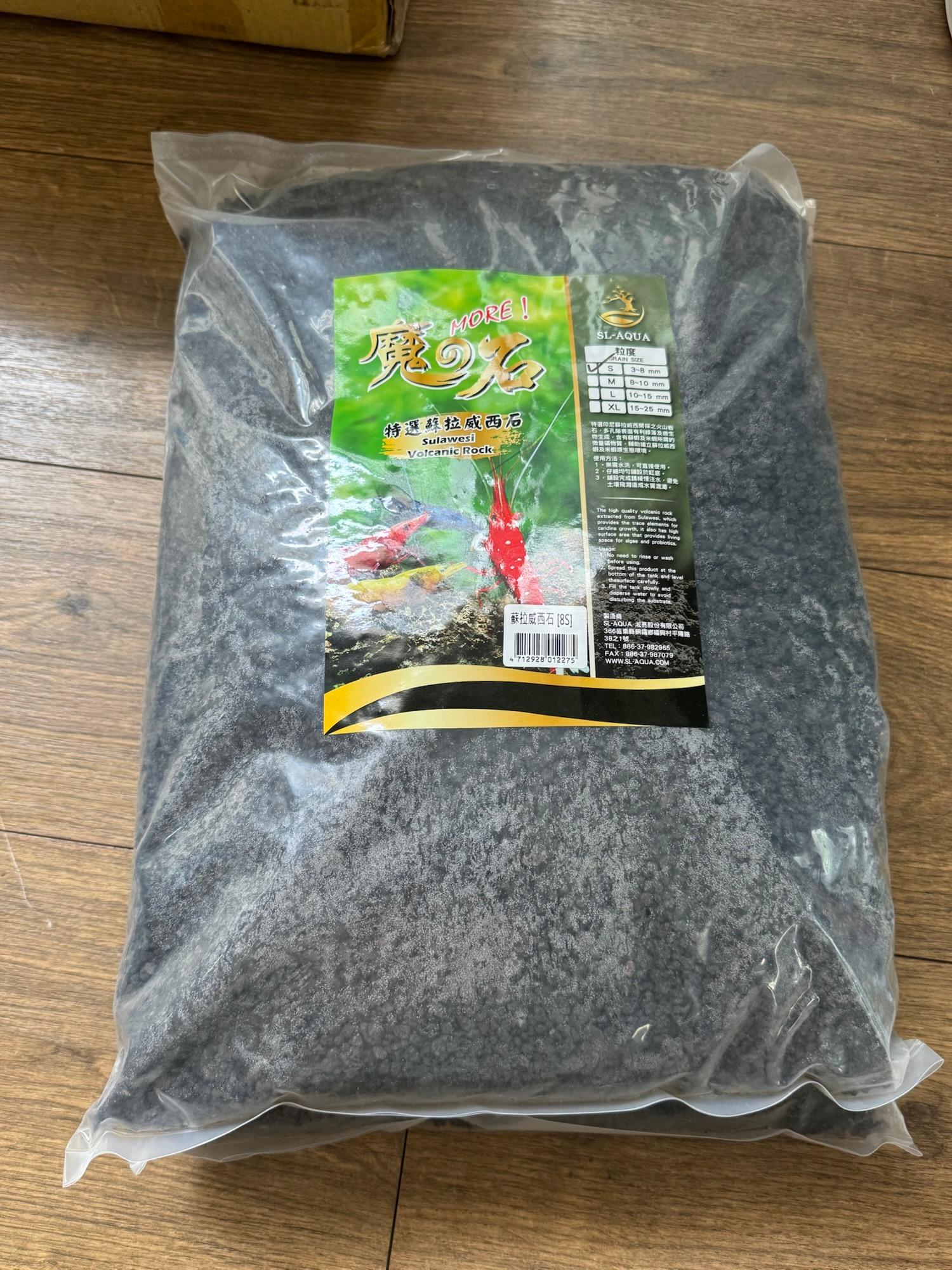 Sulawesi Volcanic Rock - Nền Sula Sand (Nhập khẩu chính ngạch)1.200.000 ₫View product
New to Sulawesi tanks?
Read the full Jack Shrimp guide to setting up a Sulawesi tank: substrate, hardscape, cycling and safe acclimation for snails and shrimp.
Read the set-up guide