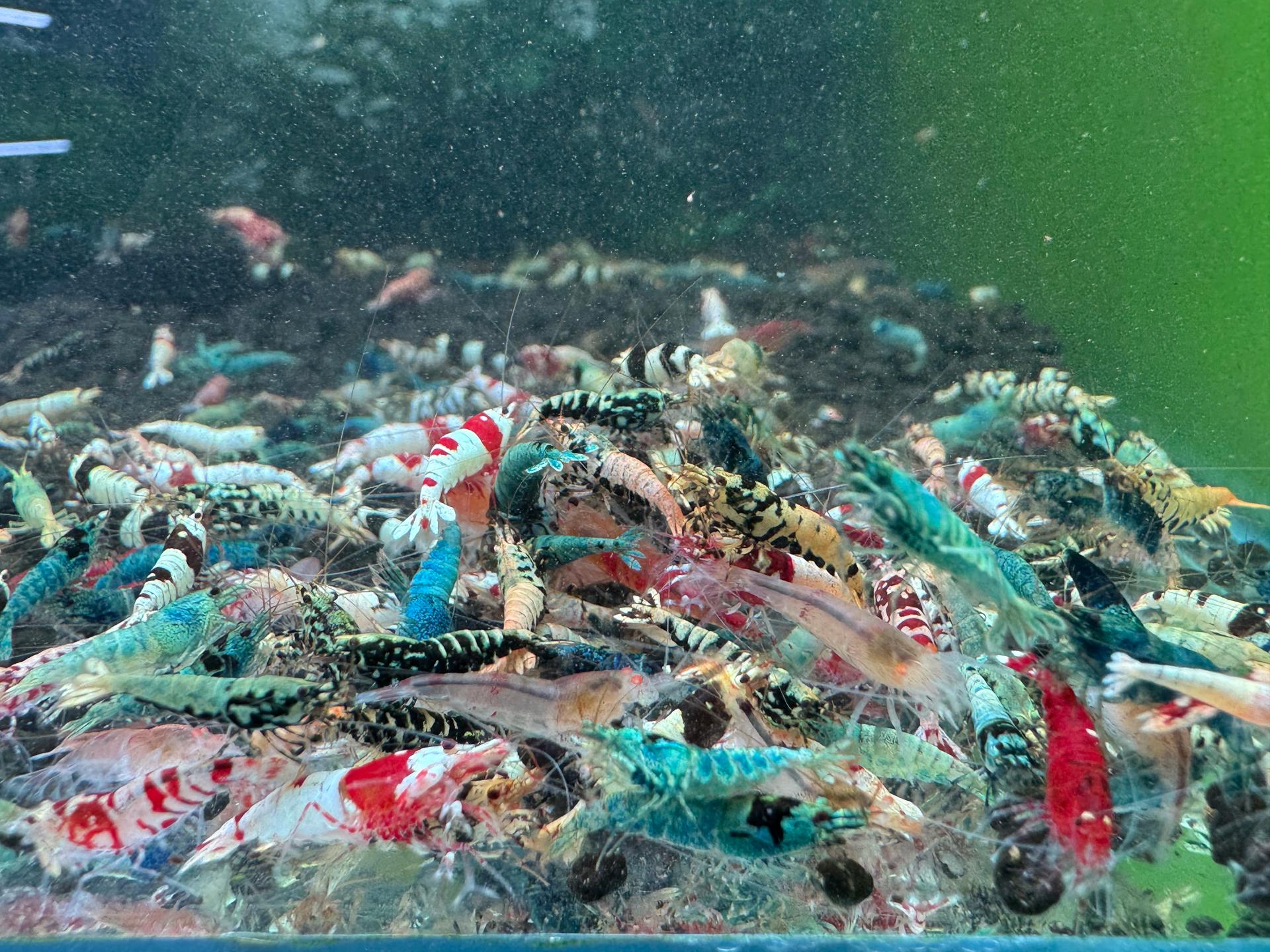
Shadow Panda
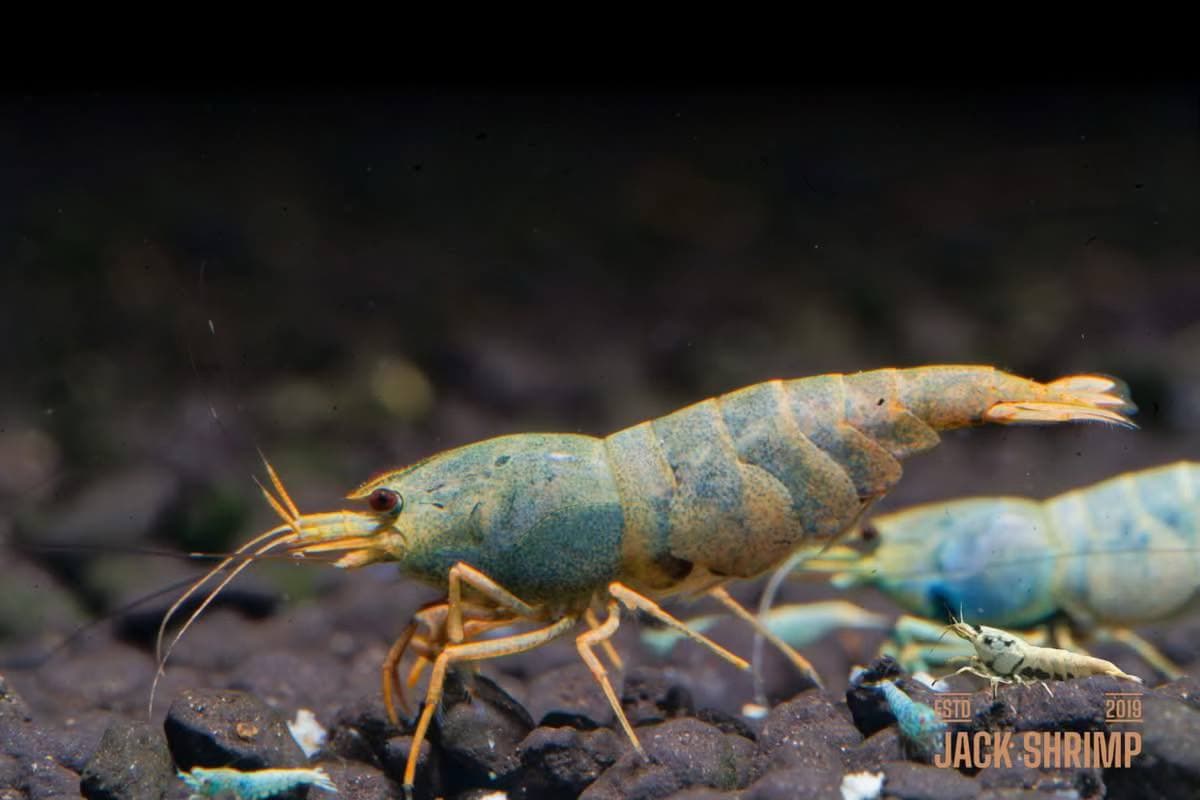
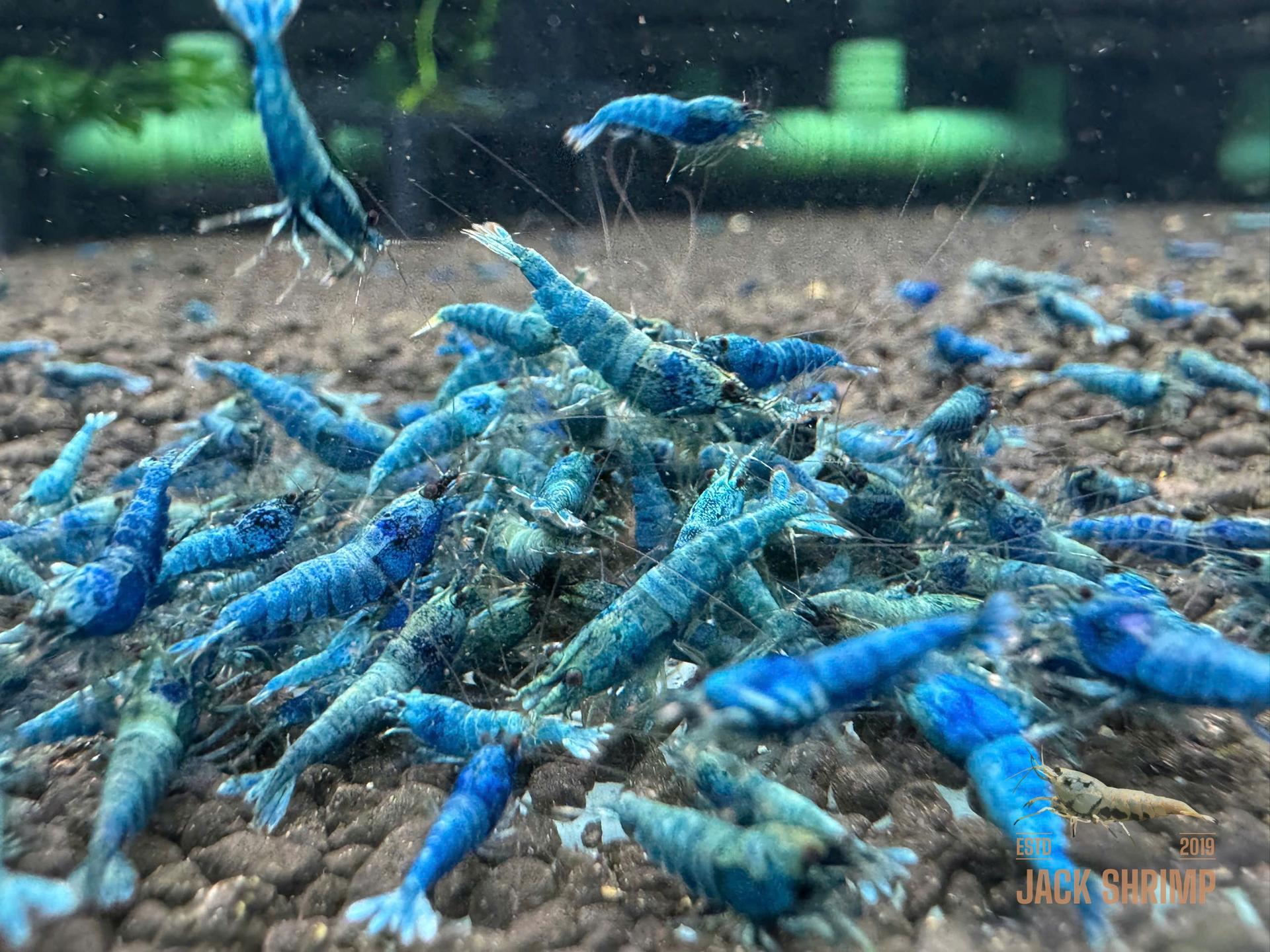
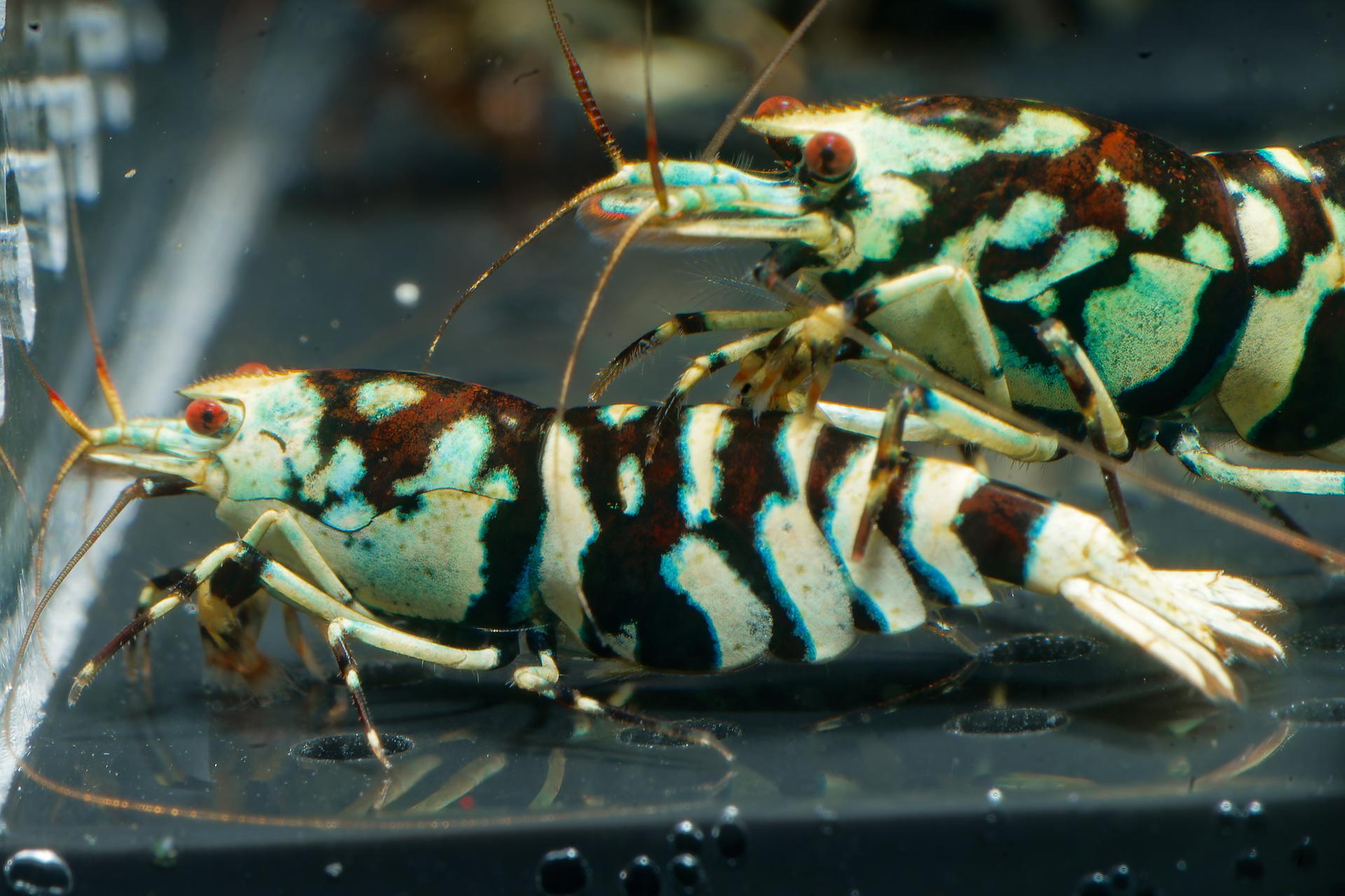
Shadow Panda sits in the BLACK branch of the Taiwan Bee family — the same branch as Panda and King Kong. Two things set this line apart: the characteristic BLUE cast inside the dark pigment, and pattern 1S — alternating blue and black bands running along the body. A clean line breeds true to Shadow Panda; what varies between individuals is how strongly the blue reads and how crisp the banding is.
With Shadow Panda, what you pay for is not how black it is — it is how much blue rises out of that black.
What is different about Shadow Panda
Everything below on water, substrate, temperature, acclimation and feeding is the standard Taiwan Bee cold-water shrimp protocol — identical to Blue Bolt, Panda or King Kong, so we keep it as it is. This section is the part only Shadow Panda has.
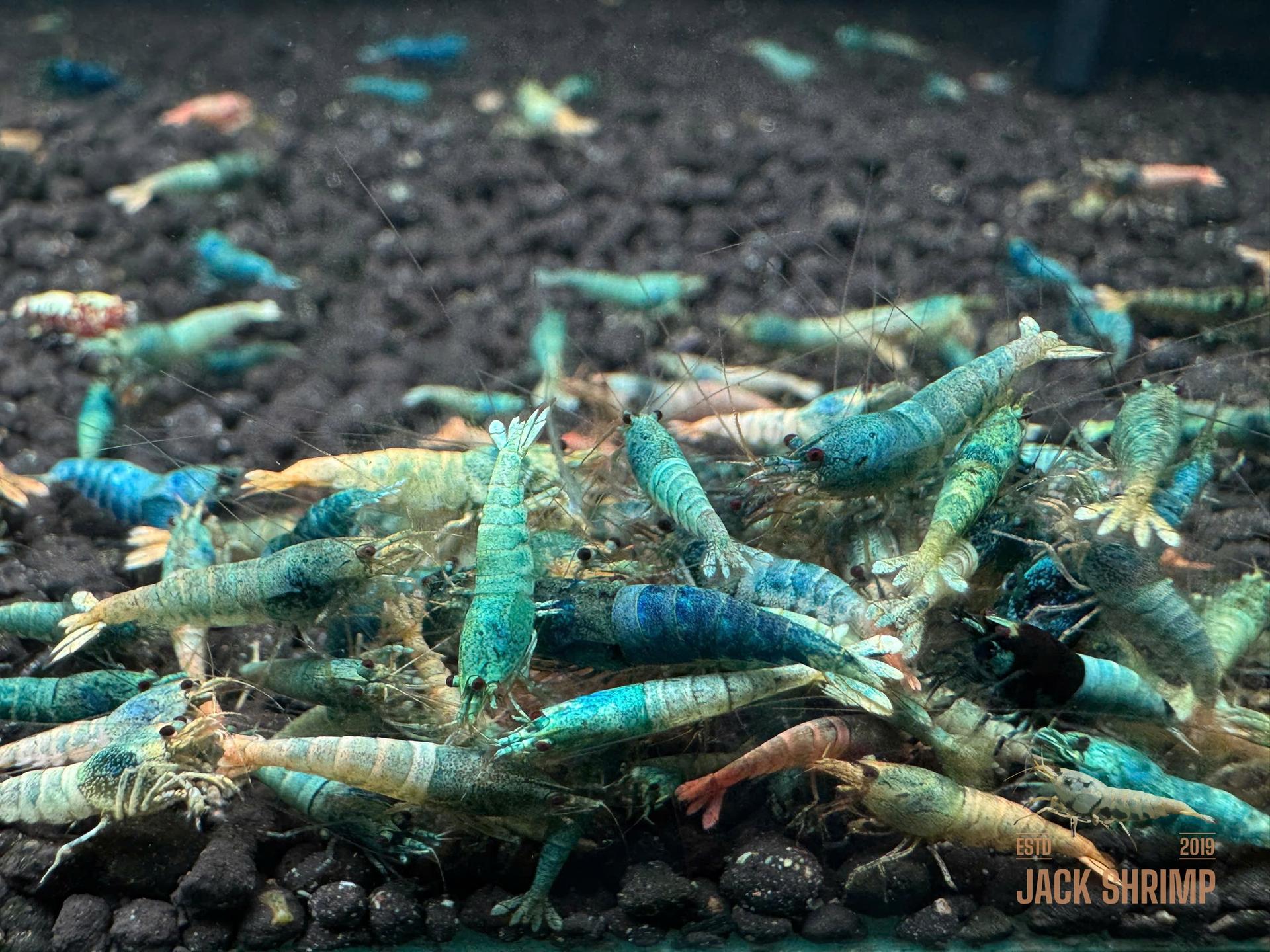
Grade wording on Taiwan Bee listings has almost no shared definition between sellers. The only thing worth trusting is a real photo of the actual batch, shot under normal light rather than under a blue lamp. If you are not sure what you are looking at, send us the photo — including another seller's photo — and we will tell you honestly where that animal sits.
A line created by people, inside glass tanks
Shadow Panda does not exist in the wild. It belongs to the Taiwan Bee group, which appeared in Taiwanese breeding facilities around 2006–2007 out of very heavily selected Crystal bee shrimp stock. The taxonomy is still disputed, so the correct and defensible way to write it is Caridina cf. cantonensis — 'cf.' means 'close to', and anyone stating a single confident species name for this line is overselling. Within the Taiwan Bee family, Shadow Panda sits in the BLACK branch alongside Panda and King Kong; its selection direction keeps the banded pattern while pushing the blue cast in the dark pigment forward.
Where the wild bee shrimp actually lives
Understanding the source stream is understanding why the tank has to be built this way — and why Vietnamese keepers call these 'cold-water shrimp'.
Real-world water parameters
This is the tight window for breeders. The TOLERATED range is wider: pH 5.5–7.0, GH 3–7, KH 0–2, TDS 100–250 — but the Taiwan Bee group specifically (Shadow, Blue Bolt, Wine Red) should sit at TDS 100–130 and GH 4–5 as above. Ammonia and nitrite must be zero; keep nitrate under 10 ppm, half the threshold used for Neocaridina. Stability still beats pretty numbers: a tank parked at GH 5 does better than one swinging between GH 4 and 7.
KH has to sit near zero — and this is where many keepers have it backwards. Carbonate (KH) both raises pH and PINS it, so as long as KH is present the substrate cannot pull pH down into the acid range. Worse: active buffering soil works by neutralising exactly that carbonate, so every degree of KH you add burns part of the soil's lifespan. In a cold-water shrimp tank, THE SUBSTRATE IS THE BUFFER, NOT KH. So mix water from RO plus a GH+ mineral (GH only) and never GH/KH+. Bonus: at pH around 6, nearly all ammonia converts to the far less toxic ammonium NH₄⁺.
GH 4–5 is the calcium–magnesium range for moulting, and it is LOWER than Neocaridina (6–12) for osmotic reasons, not because cold-water shrimp are 'weak'. The wild animal lives in a stream at 33 µS/cm — close to rainwater. Never try to fix failed moults by pushing GH above 6: below GH 4 the shell cannot form, but above 6 it becomes too thick and hard to shed. And if you must adjust GH, no more than 2 units per day.
Do cold-water shrimp really need it cold?
Plainly: cold-water shrimp do NOT need to be 6–8 degrees cooler than Neocaridina the way imported care sheets claim — the real gap is about 2–3 degrees. The '20–24°C' figure repeated everywhere comes from no experiment at all; it is simply the unheated room temperature of a Japanese or German house, copied until it became 'the standard'. The practical evidence runs the other way: Singapore keepers breed bee shrimp steadily at 25–26°C with fans; a Taiwanese wholesale sheet lists bee shrimp at 22–27°C against 22–28°C for Neocaridina — one degree of difference; and research on the wild Hong Kong streams shows those shrimp only breed once water passes 20°C. Warmth is the breeding trigger, not the thing that stops it.
- 20–24°C
- The Western textbook figure — only reachable with a chiller or an air-conditioned room
- 24–26°C
- The quality window: strongest colour, steadiest breeding — the realistic target
- 26–28°C
- Genuinely workable at Vietnamese room temperature — with 24/7 aeration, low stocking and mature substrate
- 28–30°C
- Danger zone: the colony stops breeding and thins out
- Above 30°C
- Hard ceiling. 32°C causes acute mortality
What kills shrimp at high temperature is not HEAT but OXYGEN. From 24 to 30°C, the water's oxygen-carrying capacity drops only about 10% (8.42 → 7.56 mg/L) — but the shrimp's oxygen demand, as an ectotherm, rises 50–100%. The two curves run against each other, and where they cross is where the colony dies. That makes 24/7 AERATION the single best investment for a Vietnamese keeper without a chiller — worth more than premium food. Shrimp almost never gulp at the surface the way fish do, so oxygen shortage stays invisible until you are counting bodies.
A very Vietnamese trap that few pages mention: a cooling fan evaporates water, but minerals do NOT evaporate with it. After a few days of fan running, GH and TDS climb on their own while you have touched nothing — and shrimp die of failed moults, not of heat. Top up evaporation with PURE RO, never with remineralised water. And raise aeration in hot weather, since warm water holds less oxygen.
Honest answer: to keep them ALIVE, no. To keep HIGH GRADE stock and to breed, essentially yes — and Shadow Panda SSS falls squarely in that group. A cooling fan buys about 2–3°C in Vietnamese conditions (the 4–5°C figure many shops advertise is optimistic; high humidity makes evaporation less effective), needs a thermostat controller, and needs 0 TDS RO top-up. One more thing, stated clearly: 'a thick substrate cools the tank' is a myth — do not believe it.
In a cold-water shrimp tank, the substrate IS the buffer
Active buffering soil is mandatory, not optional. It is a clay with cation exchange capacity: it releases H⁺ along with humic and fulvic acids, holds pH around 6.0–6.5, and CONSUMES the KH in the water. Never use inert substrate (gravel, sand) the way a Neocaridina tank does — without buffering soil, pH drifts above 7 and the colony stops breeding almost entirely. Fresh soil releases 2–8 ppm ammonia, so the tank must run EMPTY for 4–8 weeks before any shrimp go in; the extra time is not for the filter, it is for biofilm and microfauna to establish — that is what juveniles actually eat. Do not vacuum deep into the soil: its exchange capacity is finite, and the mulm layer on top is food.
A free test: measure TDS of the mixed water in the bucket, then measure TDS IN the tank. Working soil always pulls the in-tank number below the mixed water. That gap is the soil's remaining capacity. When the gap closes to zero and pH starts drifting past 6.8–7.0, the soil is spent — along with GH creeping up on its own, unstable readings after every water change, deaths clustering around moults, and grains that crumble to mud when squeezed. Realistic lifespan: about 12–18 months on RO, possibly only 6 months on tap water.
Shadow Panda line profile
- Line
- Shadow Panda — Taiwan Bee family, black branch
- Scientific name
- Caridina cf. cantonensis — taxonomy disputed, no settled species name
- Origin
- Man-made line, selected in captivity. Does not exist in the wild
- Position in the family
- The BLACK branch — same group as Panda and King Kong
- Signature of the line
- A BLUE cast inside the dark pigment + pattern 1S: alternating blue and black bands
- How it is graded
- By how strongly the blue reads and how crisp / even the banding is
- Grades we sell
- S and SSS
- Sizes we sell
- Juveniles and Adult
- Inheritance
- Taiwan Bee colour is a RECESSIVE trait — two copies of the gene are needed for it to show
- Breeds true?
- YES — a clean colony produces Shadow Panda; individuals differ in blue intensity and band definition
- Adult size
- 2.5–3cm
- Eggs per clutch
- 20–40eggs
- Incubation
- 28–35 days, hatching directly into 2 mm fully formed juveniles
- Maturity
- around 3–4 months
- Lifespan
- 1–2 years
- Temperature
- Above roughly 28°C they survive but breeding all but stops
- Difficulty
- Moderate to hard — not a first shrimp tank
- Tank
- Species-only: interbreeds with tiger shrimp, Crystal bee shrimp and every other Taiwan Bee colour
Recessive genes, Mischling, and why 'breeds true' is what you are really paying for
This is the decisive part of buying Taiwan Bee, and it differs sharply from Crystal bee shrimp. Taiwan Bee colour is RECESSIVE: an animal needs two copies of the gene before colour appears. The concrete consequence — cross a Taiwan Bee with a Crystal bee and the F1 generation does NOT come out Taiwan Bee; it comes out looking exactly like ordinary bee shrimp while carrying the gene hidden inside. Hobbyists call those Mischling. They are not junk: Mischling is the standard tool for restoring vigour to a Taiwan Bee line that has been inbred too long. And here is the point that matters most to a buyer: a clean Shadow Panda colony breeds Shadow Panda — what varies between individuals is only blue intensity and band definition. Juveniles hatch pale and colour up with age.
ONE CROSS AND THE LINE IS GONE. Taiwan Bee (Shadow Panda, Panda, King Kong, Blue Bolt, Wine Red) is not a grade — it is a homozygous RECESSIVE state. What makes it dangerous: the F1 cross (Mischling) looks exactly like a slightly pale ordinary bee shrimp while SILENTLY carrying the gene. You cannot see it, and neither can the seller, until F2 throws every colour imaginable and the pure line you spent years building is finished. There is no documented case of a contaminated line being recovered.
Shadow Panda does NOT interbreed with Neocaridina — different genus, and that is the only good news here. But it DOES interbreed with tiger shrimp (Caridina mariae), the entire Crystal/Bee group, and every other Taiwan Bee colour (Blue Bolt, King Kong, Panda, Wine Red…). So the line 'Taiwan Bees can all be kept together', which you will read everywhere, is only true about SURVIVAL. Genetically it is the worst advice possible.
With Shadow Panda, the thing that sets the price cannot be seen in a photo: whether the parent colony is clean. Jack Shrimp's Shadow Panda colony is kept in a dedicated tank with no other Taiwan Bee colour anywhere in the same system. SSS stock is selected out of that breeding colony; S stock is healthy, line-true animals, sensible for a display tank. Tell us whether you are breeding or just keeping — we advise by purpose and do not push the expensive option.
Breeds true — but only breeds when the water is cool enough
Females carry roughly 20–40 eggs and incubate them for 28–35 days (about 4–5 weeks) before hatching directly into fully formed 2 mm juveniles — no larval stage, no brackish water, no separate fry food. Maturity comes at around 3–4 months. Females are larger than males with a visibly deeper, curved abdomen. But the number that matters most to a Vietnamese keeper is not in that list: above roughly 28°C the colony survives but almost stops breeding, with shortened lifespan and higher disease risk. Alive is not the same as breeding — which is why breeders here invest in cooling before they invest in more expensive stock. Juveniles do not die from a lack of pellets; they die because the tank is not mature. That is the real reason behind 'run it empty for 4–6 weeks'.
The 'white ring of death' — the white gap between carapace and abdomen when a shrimp cannot complete its moult — cannot be treated, only prevented. It nearly always follows a large water change or a GH swing. So: 10% weekly or 10–20% monthly water changes, DRIPPED in rather than poured, and respect three limits — TDS no more than 10–25 ppm/day, GH no more than 2 units/day, temperature no more than 2–3°C/day.
Acclimating cold-water shrimp — step by step
Open the box immediately, lights off
Do not leave the box in a corner for later. The shrimp have been in the dark for over a day. Photograph the sealed bag before opening — that is your evidence if a claim is needed.
Match temperature first
Float the sealed bag in the tank for 15–20 minutes. A sudden temperature swing is more dangerous than sitting a while at a non-ideal temperature. The safe limit is 2–3°C.
Pour shrimp and bag water into a separate container
Not into the tank. A clean bowl or bucket, held at tank temperature.
Drip for 2–3 hours
At 1–2 drops per second. Do two rounds: drip until full over 30–60 minutes, pour some off, then fill again — this pushes the tank-water fraction above 75%. For SSS grade Taiwan Bee, stretch it to 3–4 hours. If dripping runs past 2 hours, drop a small air stone into the container.
NET the shrimp across — never pour bag water into the tank
This rule is not negotiable. Bag water carries accumulated ammonia, bacteria from a cramped transport environment, and parameters nothing like your tank. Pour it down the drain.
Leave them alone
Lights off for the rest of the day, NO food for 24 hours, NO water change for the first 7 days. Shrimp sitting still for a few hours after release is normal, not a sign they are dying.
THE 24–72 HOUR DEATH. Something few sellers will say out loud: the most disputed losses do NOT happen at unboxing. Moving tanks usually triggers a moult, and if the receiving tank's GH is wrong that moult fails — the shrimp dies 24–72 hours later while looking perfectly healthy on arrival. So the receiving tank must be ready BEFORE the order is placed, not prepared on the day the shrimp land. We stop feeding 24–48 hours before packing — the single most effective way to limit ammonia in the bag.
The set-up that goes with it
Feed 2–3 times A WEEK, not daily, with 1–2 deliberate fast days. Dose: a fingernail-sized pinch per 10–20 shrimp, and it must be gone in 2–3 hours — anything left after 4 hours should be removed and the next dose cut. Rotate the menu: shrimp pellets, blanched vegetables (squash, kale), dried Indian almond leaf — variety matters more than the protein number on the packet. Bacterial powders specifically should be used at 1/8–1/2 of the label dose, 2–3 times a week: the manufacturer's dose triggers bacterial blooms and oxygen crashes.
OVERFEEDING KILLS MORE THAN TEMPERATURE DOES. With Taiwan Bee, overfeeding is the most common cause of mass die-offs — ahead of temperature. It generates ammonia, drives bacterial blooms that crash oxygen, and feeds planaria, hydra and Vorticella. Planaria and hydra are not bad luck — they are a measurement of how much uneaten food is in the tank. When you see them, cut feeding first before reaching for medication. The healthiest colony is a slightly hungry one with plenty of biofilm to graze.
COPPER (Cu). Dissolved copper kills shrimp at very low concentrations. The real culprits: copper-based fish medications (the fish dose is 2–3× the shrimp-lethal dose), snail treatments, concentrated trace-element fertilisers, copper plumbing, and aquatic plants carrying pesticide residue. Conversely, copper in FOOD is essential — around 40% of the copper in a shrimp's body sits in hemocyanin, its oxygen-carrying blood molecule. Needed from food, not from the water.
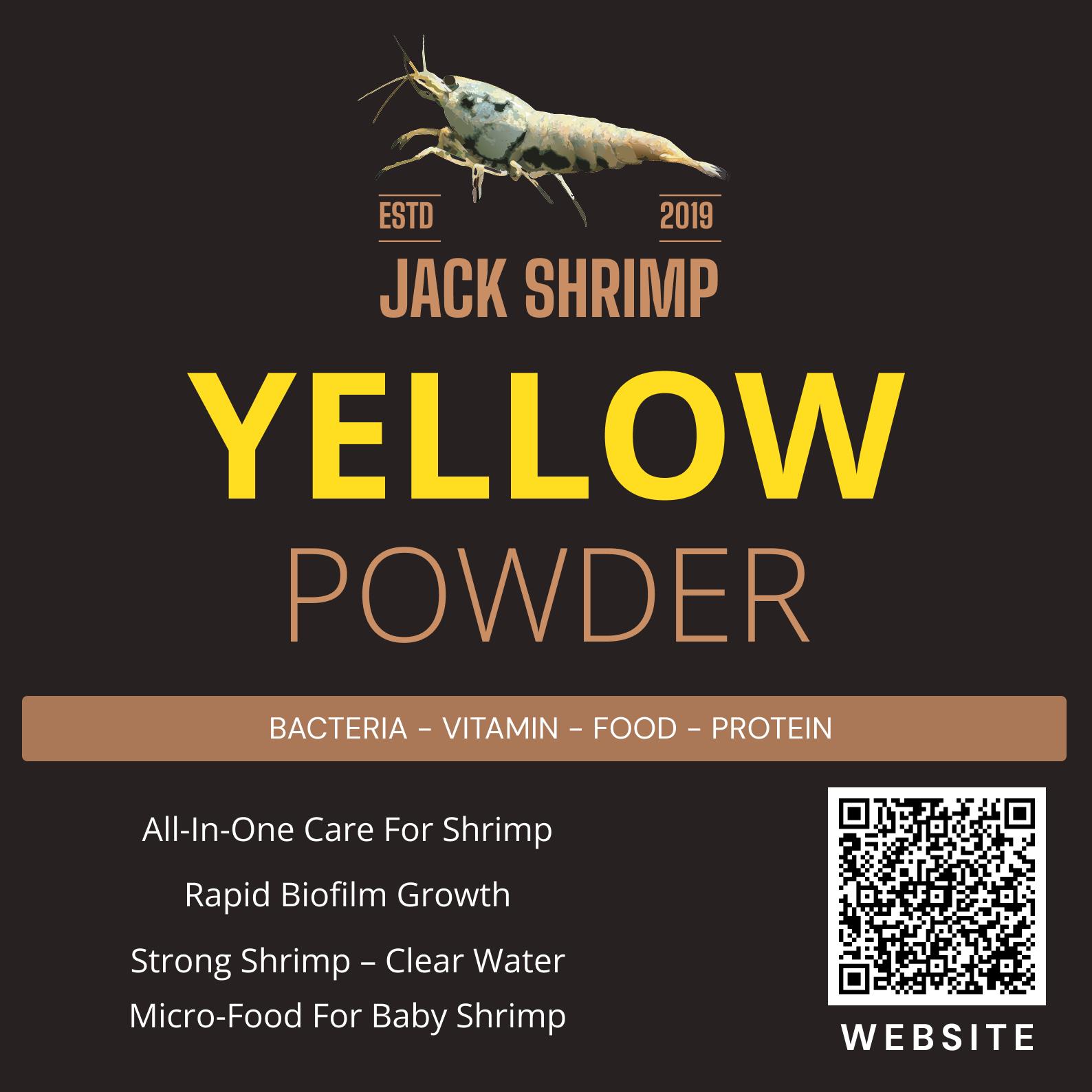
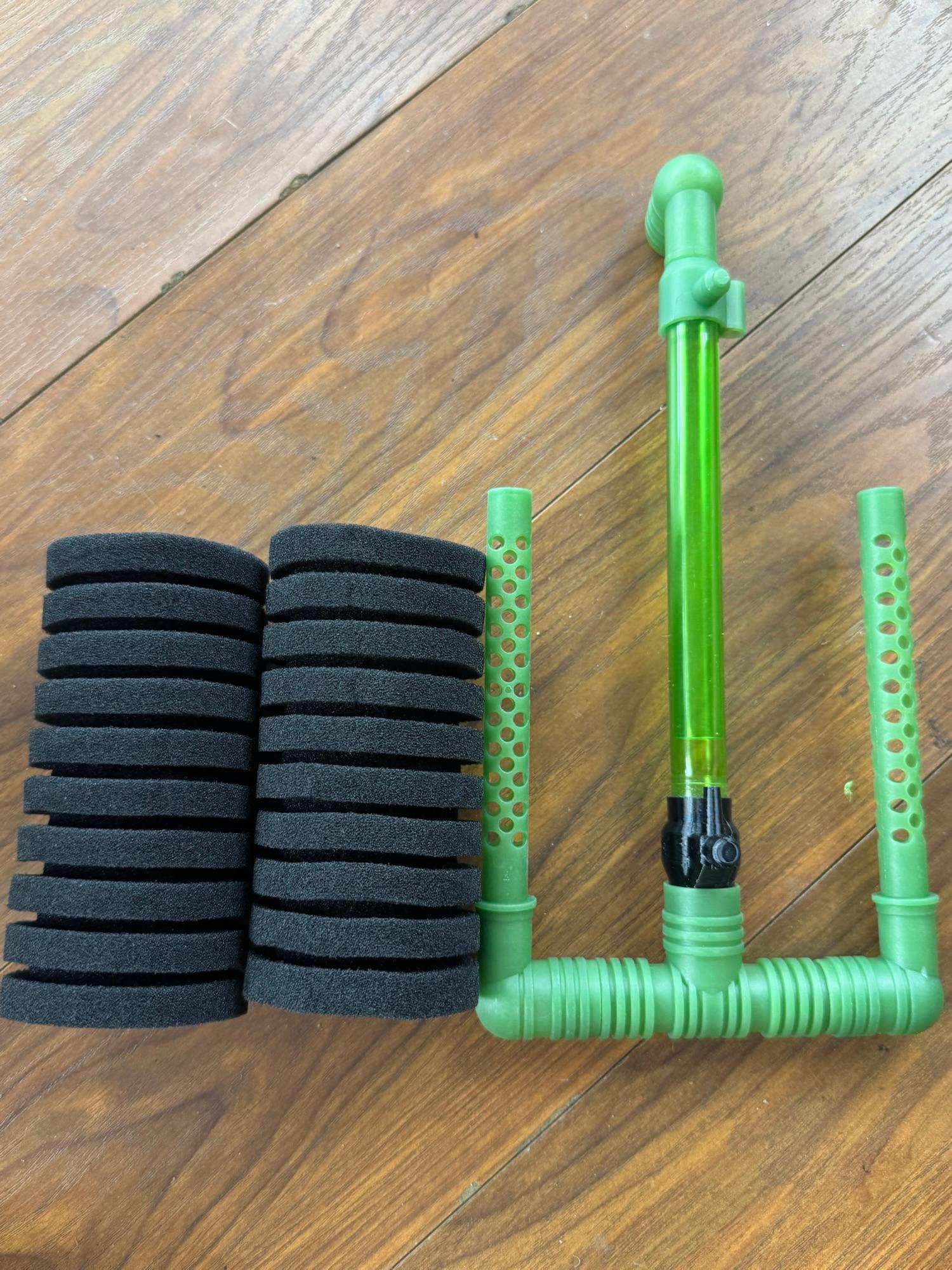
A cold-water shrimp set-up is nothing like a Neocaridina one, and the four items below are the mandatory part, not the upgrade. Active buffering soil holds pH and consumes KH — without it nothing else matters. Gray Powder handles the microbiology: seeding and sustaining the beneficial bacterial population, growing the biofilm the shrimp graze, and cushioning stress at introduction, at moult and after water changes. Yellow Powder adds vitamins and protein. An airlift-driven bio filter both filters and aerates — and as said above, aeration is the best money you can spend keeping these at Vietnamese room temperature.
How is Shadow Panda different from an ordinary Panda?
In the blue and in the pattern. An ordinary Panda is black and white; Shadow Panda carries a BLUE cast inside the dark pigment, plus pattern 1S — alternating blue and black bands running down the body. Care is identical: still Taiwan Bee cold-water shrimp, still active buffering soil, still a species-only tank.
Should I buy Juveniles or Adult?
Juveniles are cheaper but have not finished colouring up and the bands have not fully separated — suited to keepers who want to grow them on and accept some uncertainty about the final colour. Adults have settled blue and banding, so what you see is what you get. For breeding or for a display tank, choose Adult.
What is the difference between S and SSS?
S is line-true stock: blue and banding already clear, plenty for a display tank. SSS is selected out of the breeding colony itself: blue standing out strongly against the dark, 1S banding crisp and even, no bleeding. The gap is in how strongly the blue reads and how clean the bands are — send us a photo of your tank and we will advise by purpose rather than push the expensive option.
Can I keep them with Blue Bolt or Panda?
They will live together, but the lines will not survive it. Shadow Panda interbreeds with tiger shrimp, Crystal bee shrimp and every other Taiwan Bee colour. One stray animal and two generations later there is no line left. A Taiwan Bee tank has to be species-only.
How long before a new tank is ready for them?
4–6 weeks running empty on active buffering soil, not the 2 weeks care sheets usually claim. Message Jack Shrimp before you set the tank up — the advice is free, and we would rather lose an order than have you lose a tank.
If the tank is not ready, do not order the shrimp yet
A cold-water shrimp tank needs 4–6 weeks running empty on active buffering soil before the first animal goes in. Taiwan Bee additionally needs a SPECIES-ONLY tank. Message us before you set it up — the advice is free.
See the cold-water set-up →